Choosing an automatic parking barrier is not just a matter of comparing prices or looking for the model that opens fastest. The barrier must adapt to the width of the access point, the clear height, the number of vehicles, the environmental conditions, the required level of security and the control system the facility already uses. A correct selection helps organize entry and exit, reduce delays and avoid operating problems caused by an inadequate specification.
For projects in Argentina — from a building parking garage or a gated community to a commercial parking lot or a logistics center — the access point should be evaluated as a complete system. The barrier, the sensors, the identification method, the controller and the emergency procedure must work in coordination.
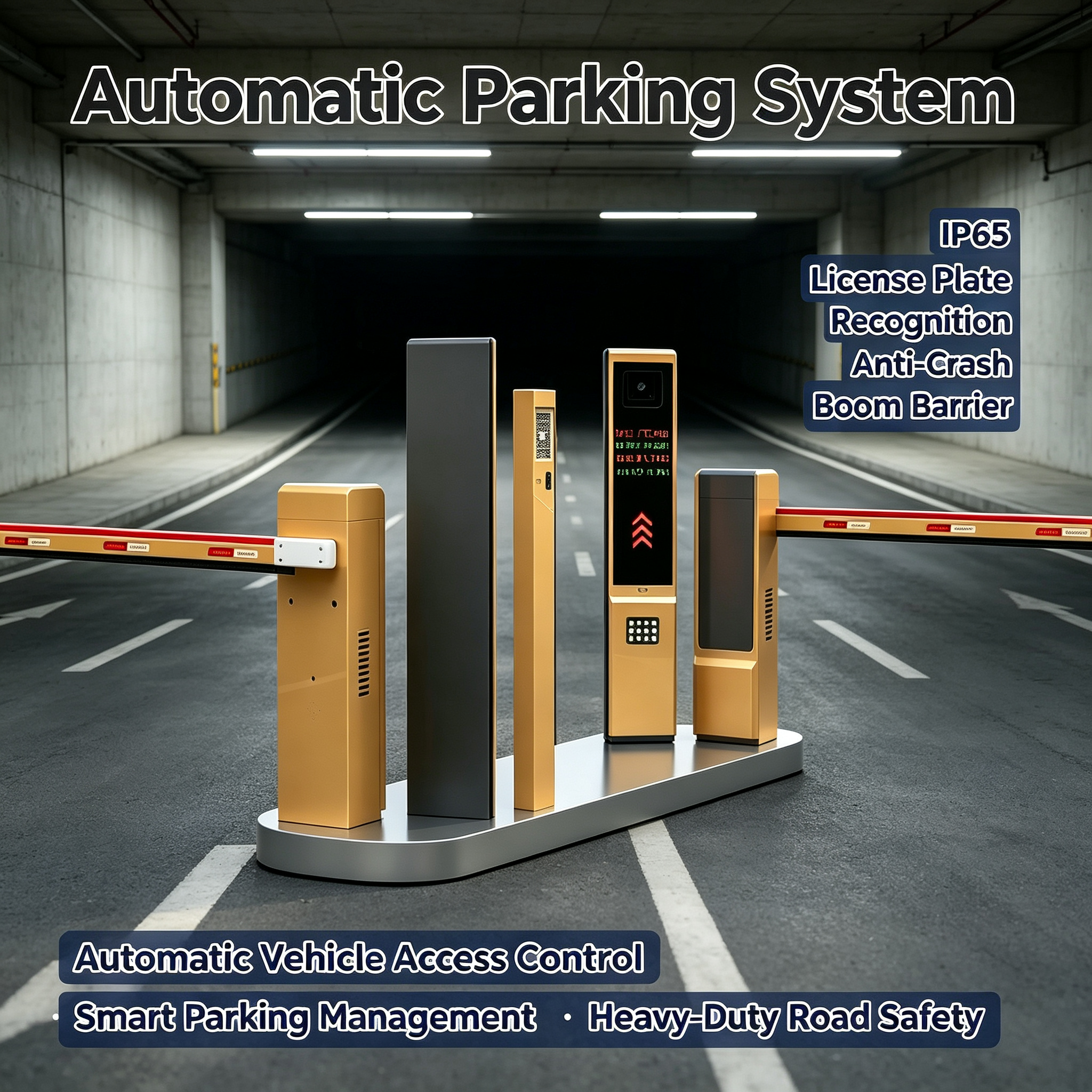
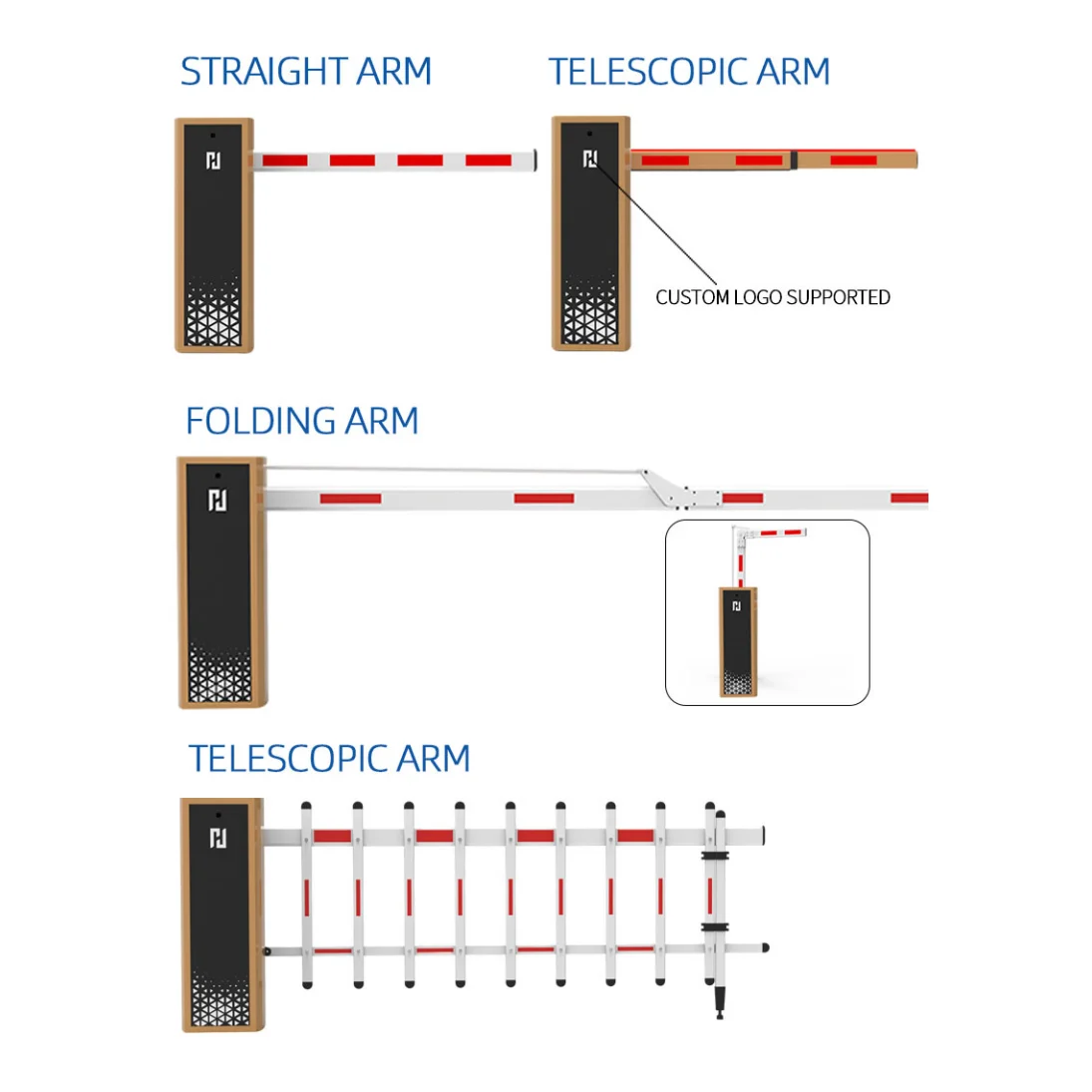
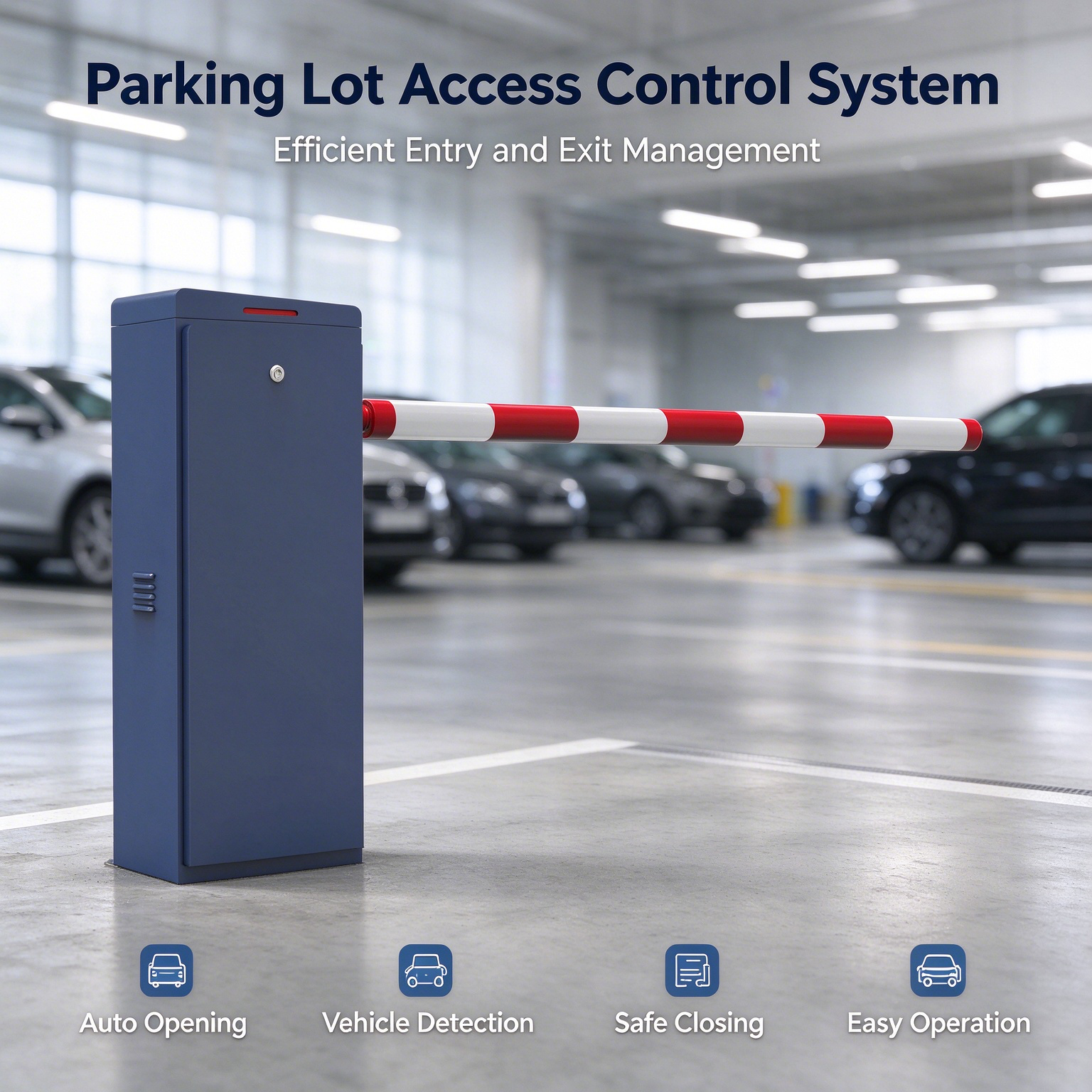
The first step is to measure the usable width that the boom must block, taking into account vehicle paths, curbs, columns and any element that could interfere with the installation. BAROXON offers configurations with straight, folding and fence-type booms, with lengths that can be configured according to the model; the published range indicates options of approximately 1 to 6 meters as well as special solutions for wider access points. Always confirm the range of the exact model before specifying the equipment.
Do not choose the boom based only on the nominal width of the gate. It is also necessary to check where the cabinet will be fixed, which way it will open, whether there is a second barrier at the same access point and whether the boom can move without encroaching on a pedestrian area. For truck lanes or special vehicles, request an installation drawing and a specific technical confirmation.
The straight boom is usually the simplest option for outdoor access points or garages with sufficient height. It is common in commercial parking lots, offices, gated communities and industrial access points. Before installing it, check the turning space, the visibility of the boom and pedestrian circulation around the lane.
A folding boom barrier can solve access points with low ceilings, such as basements, covered parking garages or entrances close to beams and ducts. The folding mechanism must be compatible with the actual clear height and with the boom trajectory. Measure the height from the floor to the lowest obstacle and ask the supplier to confirm the required opening space.
The fence-type boom incorporates additional crossbars and allows the passage to be visually delimited. It can be useful at access points where a more visible barrier is desired, but it requires reviewing the space, wind exposure and the safety conditions of the site. Not all designs are suitable for all lanes.
A residential entrance with moderate traffic does not have the same needs as a commercial parking garage, a transport terminal or a distribution center. Estimate how many vehicles pass per hour at peak times, how many opening and closing cycles are expected per day and how long a vehicle can wait without creating a queue that affects the street.
For heavy-duty access points, review the duty cycle declared by the manufacturer, the motor capacity, the mechanism design and the planned maintenance. BAROXON's data sheet lists configurations with a 24 V DC brushless motor, high-frequency operation and cycle data that depend on the model. Do not extrapolate the service life of one version to another: request the technical data sheet of the quoted configuration and confirm the test conditions.
Opening speed should also be evaluated in context. A faster opening can help reduce waiting, but the appropriate speed depends on the length and type of boom, lane safety and the identification system. Instead of simply asking for “the fastest”, define the expected flow and request a technical recommendation.
If the barrier is to be installed outdoors, verify the degree of protection of the cabinet and components, the permitted temperature range and the resistance to dust, rain and the conditions specific to the site. BAROXON lists configurations with IP65 protection; confirm that this rating corresponds to the specific model and that the complete installation follows the manufacturer's instructions.
In wind-exposed areas, the boom may experience different loads depending on its length and design. At coastal, industrial or dusty access points, corrosion, cleaning and the inspection program should also be considered. If site conditions are demanding, send photos and measurements to the supplier so that the configuration can be validated before purchase.
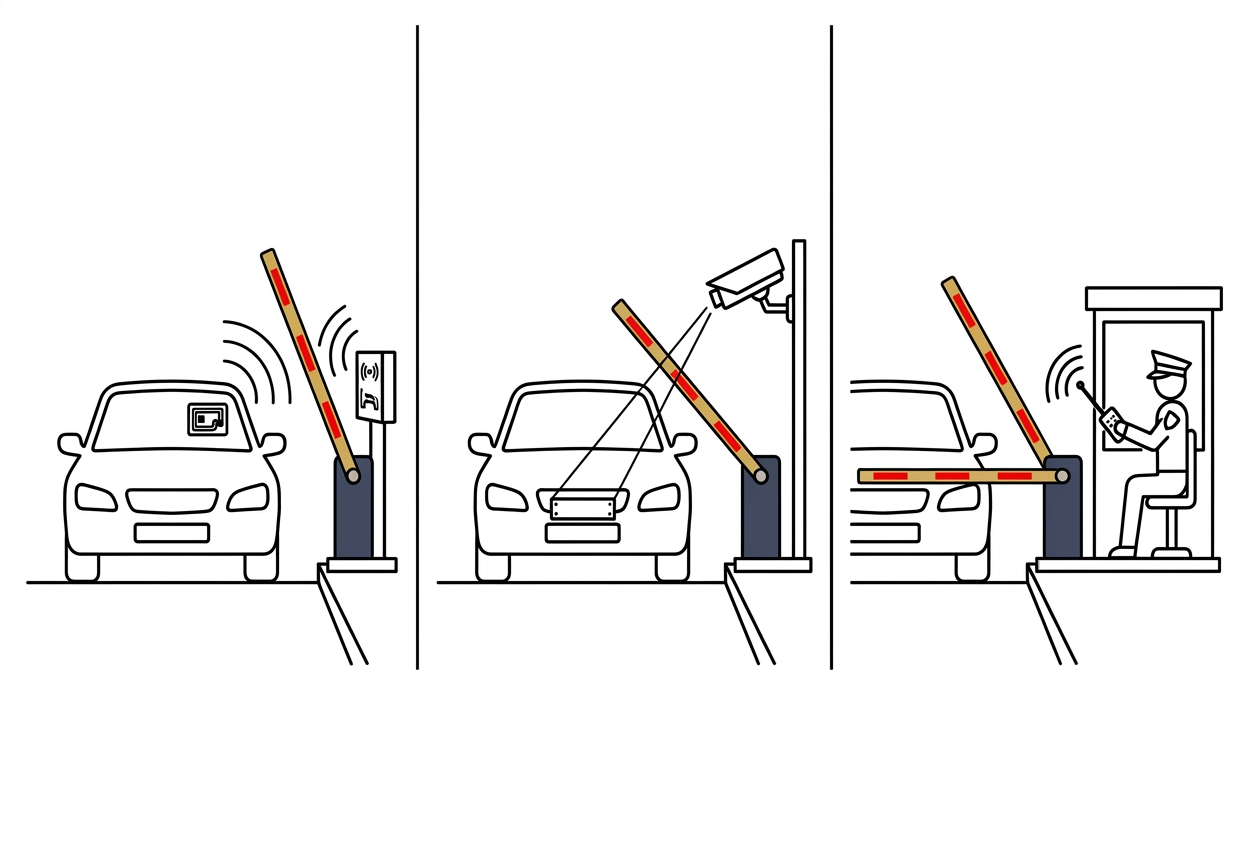
The barrier can work with different authorization methods. The choice depends on who uses the access point, how credentials are managed and what information the operator needs to record.
Before buying, check compatibility between the barrier controller, the readers, the camera and the existing software. Ask for information on available interfaces, control inputs and outputs, connectivity and integration tests. If the facility already uses a third-party system, do not assume compatibility without technical validation.
The barrier must be part of a safety design that includes vehicle detection, prevention of premature closing, visible signage and emergency procedures. Depending on the project, loop detectors, radars or other compatible devices may be used. The right solution depends on the lane geometry, the vehicle type and the installation conditions.
Ask which safety devices are included and which are quoted separately. Confirm how the barrier behaves in the event of vehicle detection, a loss of communication or a power failure. Sensors reduce risks, but they do not replace correct installation, maintenance or operating procedures.
To compare total cost of ownership, consider the purchase price, installation, accessories, energy, inspections, spare parts and technical support. For certain configurations, BAROXON lists a maximum consumption of 140 W and a standby consumption of less than 5 W; verify these values in the data sheet of the selected unit before calculating expected consumption.
Request the installation and maintenance manual, the warranty, the availability of wear parts and the technical support channels. At a critical access point, it is also advisable to define who will handle failures, how long the lane may remain out of service and what manual procedure will be applied during an interruption.
A useful quotation should state the exact model, the boom type and length, the motor, the configured speed, the duty cycle, the IP rating, the sensors included, the control system, the accessories, the warranty and the commissioning services. It should also clarify which components are optional and which are required for the system to work as expected.
To compare two proposals, make sure they are calculated for the same lane width, traffic volume, identification method and security level. A lower initial price does not necessarily mean a lower long-term cost if sensors, interfaces, spare parts or support are missing.
Prioritize a configuration compatible with the actual width of the access point, daily use and the available authorization method. If the access point has a low ceiling, consider a folding boom. If there are few users and traffic is moderate, a simple solution may be sufficient, provided that it includes the necessary safety devices.
Consider RFID/UHF for frequent residents and a specific procedure for visitors, suppliers and unregistered vehicles. Review night visibility, credential management, vehicle detection and operational backup if the connection fails.
Evaluate peak-hour flow, cycle time, integration with tickets or payments and the ability to record entries and exits. An LPR/ANPR solution can be useful when license plates need to be identified and permits automated, provided that the lighting, camera location and software are suitable.
Define the type and size of the vehicles, the width of each lane, the opening frequency and the environmental conditions. For trucks or wide access points, request a specific technical assessment of boom length, wind load, visibility and detection devices.
Before contacting the supplier, prepare the following data:
Which automatic barrier is suitable for a residential garage?
It depends on the width of the access point, the available height, the frequency of use and how users are authorized. An entrance with sufficient height can take a straight boom; if there is a low ceiling, a folding version may need to be evaluated. The final selection should be based on measurements and the model's technical data sheet.
When is a high-speed barrier advisable?
It can be useful when traffic volume is high and delays affect operations. Even so, speed must be combined with boom length, vehicle detection, safety and the real capacity of the system. Ask for the stated speed to be confirmed for the specific configuration.
Can I connect the barrier to a license plate recognition camera?
Yes, if the controller and the LPR/ANPR system are compatible and correctly configured. Before buying, confirm the interfaces, the lighting conditions, the camera location, the management of authorized lists and the behavior in the event of an invalid reading.
What degree of protection do I need for an outdoor barrier?
It depends on exposure to dust, rain, temperature and site conditions. Review the IP rating of the exact model and the manufacturer's instructions. The cabinet rating does not remove the need to install and maintain all components correctly.
What information does BAROXON need to recommend a model?
The most useful information is the lane width, clear height, photos of the access point, vehicle types, estimated traffic, environmental conditions and the desired control system. With that data, it is possible to assess which configuration should be quoted and which accessories must be included.
The right automatic barrier is the one that responds to the real conditions of the access point and to the daily operation of the facility. Measuring the lane, defining the boom type, calculating the traffic volume, verifying the sensors, choosing the identification method and confirming integration before buying helps reduce specification errors and unexpected costs.
BAROXON offers automatic barriers with different boom configurations, motor options, sensors and possibilities for integration with RFID and license plate recognition. To define the correct model in Argentina, share the access dimensions and operating requirements, and validate every technical data point with the data sheet of the quoted product.

 WhatsApp
 WeChat