Choosing a vehicle barrier for an underground car park requires more than comparing the price of the equipment or the opening speed. In a covered access point, the clear height, the ramp slope, the space for maneuvering, the location of columns and pipes, the traffic volume and the safety of pedestrians and vehicles directly influence the choice. The barrier must adapt to the real geometry of the entrance and to the building's access control system.
In Argentina, this type of installation appears in building garages, condominiums, offices, hotels, shopping centers and covered parking facilities. In many cases, the access point combines a narrow ramp, a tight curve or a limited height. That is why, before choosing the boom, it is advisable to measure the site and observe how vehicles approach, brake and turn.
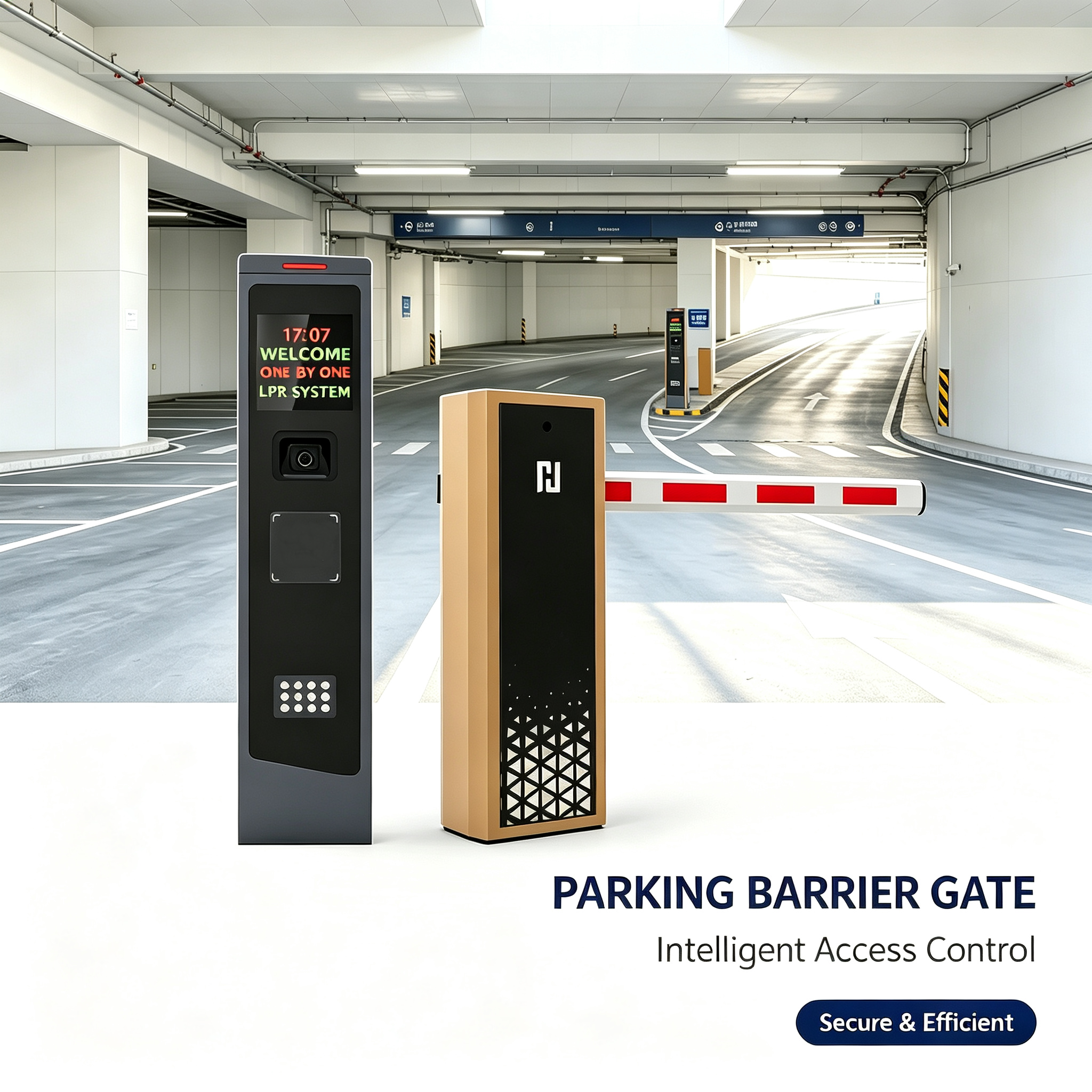
The first check in an underground car park is the available clear height. Measure from the finished floor to the lowest point of the slab, beam, pipe, cable tray, luminaire, sign or duct that could interfere with the movement of the boom. The measurement must be taken in the exact area where the barrier will be installed, not only at the outdoor entrance.
If the ceiling is low or the straight boom does not have enough space to rise, evaluate a folding or articulated configuration, provided the model is designed for that application. BAROXON offers different boom configurations, including straight and folding options; the specific compatibility must be confirmed with the data sheet and the access point plan.
Do not rely only on the height of the cabinet or on a product photo. Ask the supplier for an opening diagram with the dimensions of the boom, the cabinet, the supports and the full travel. Also check that the boom cannot hit signs, luminaires, pipes or vehicles stopped on a slope.
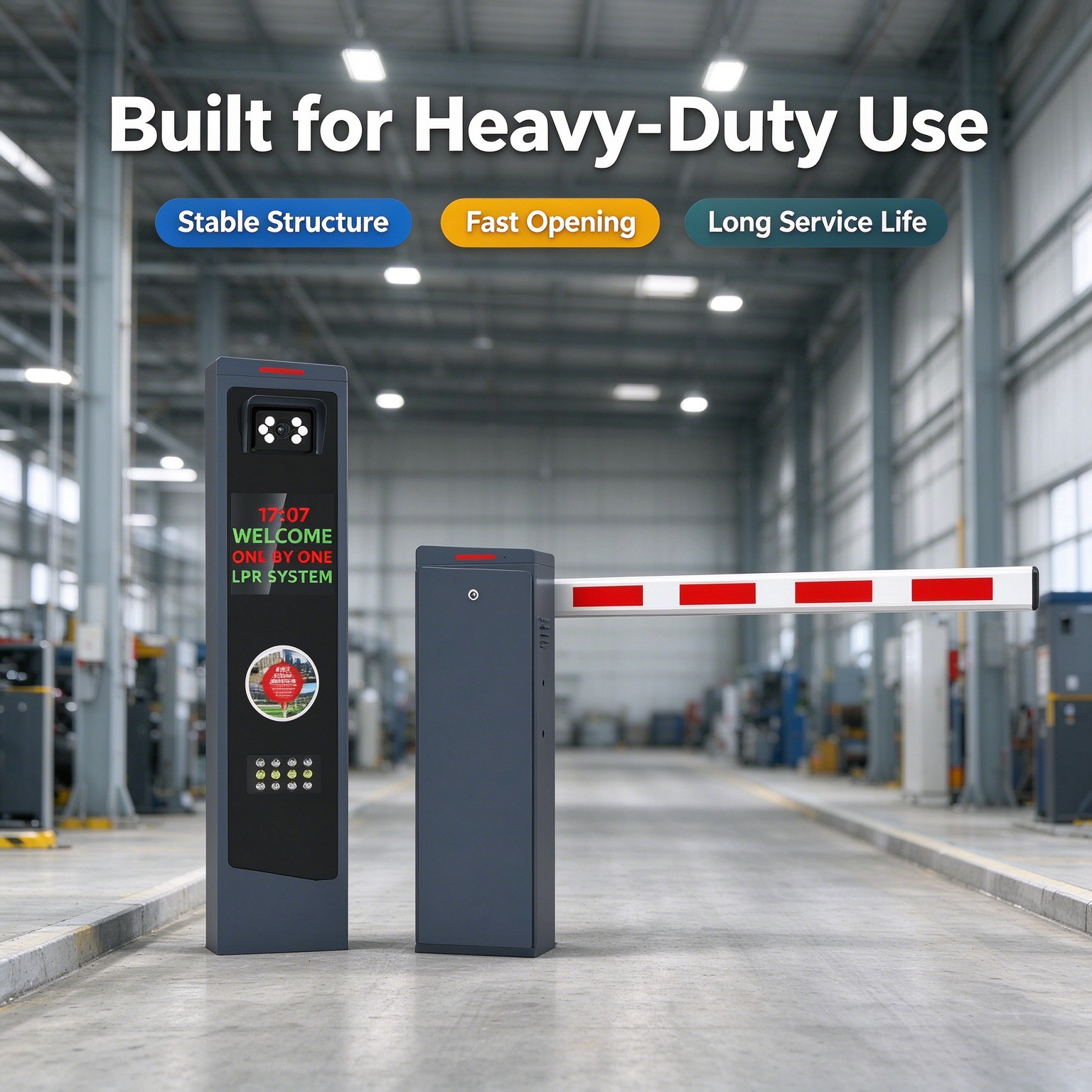
Measure the usable width of the lane and determine whether the access point is one-way, shares entry and exit or has separate lanes. The barrier must cover the intended passage without invading the turning path or forcing drivers to come too close to a column, wall or access reader.
In a car park with a ramp, the vehicle may approach at a different angle than in an open parking lot. Consider the distance between the stopping point, the reader or the camera, the boom and the inner door. Leave space so that a car can wait without blocking the sidewalk, the street or the circulation inside the garage.
There is no single ideal boom type for all car parks. The selection depends on the clear height, the lane width, the path of the vehicles and the space available for movement.
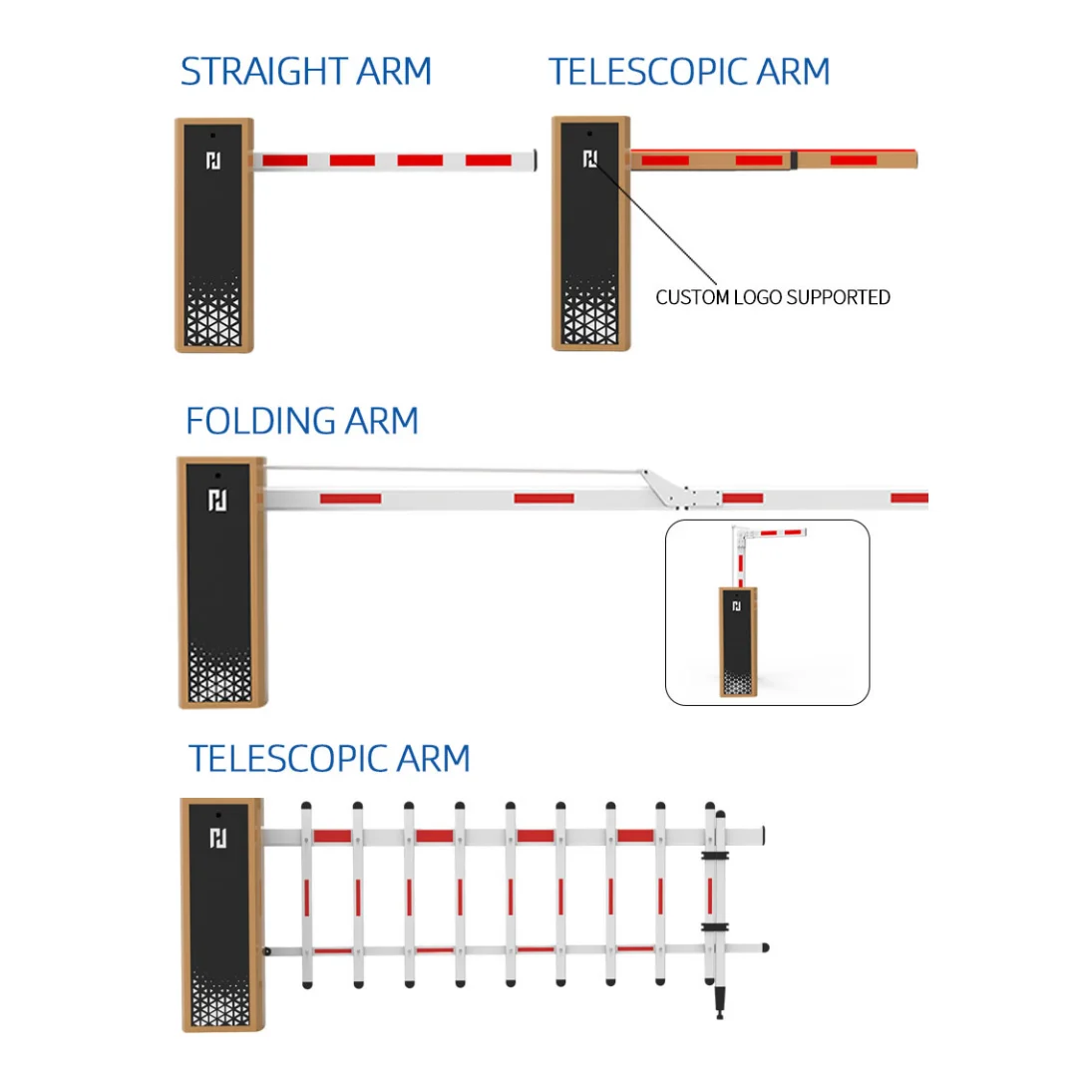
Before buying, ask the supplier to confirm the boom length allowed for the model, the appropriate speed and the mounting requirements. Do not assume that all booms can be installed on all cabinets or that a longer boom is always better.
Estimate how many vehicles enter and exit during a normal day and during peak hours. A residential car park with staggered schedules may have a different pattern from a commercial parking lot, a hotel or an office building where many vehicles arrive at the same time.
Ask about the duty rating and the recommended daily cycles for the specific model. BAROXON publishes high-traffic configurations with specifications that may include up to 5,000 cycles per day and a declared service life of millions of cycles; these values should not automatically be attributed to the entire range. Confirm the data in the data sheet of the quoted unit and review the test conditions.
The opening speed must also respond to the flow of the access point. A barrier that is too slow can create a queue at exit times; an opening that is too fast, without adequate detection and signaling, can increase the risk of incidents. The final configuration must balance performance, safety and site characteristics.
In an underground car park, vehicles may stop on a ramp, remain close to the boom or move slowly due to poor visibility. Ask which sensors the system supports and how it prevents the boom from lowering onto a vehicle. Depending on the design, inductive loops, radar sensors, photocells and other compatible devices may be evaluated.
Detection should not be considered an optional accessory without analyzing the risk. Define the location of the sensors, the opening and closing logic, the behavior when a detection is permanent and the response to a failure. Installation and testing must follow the manufacturer's instructions and the applicable regulations.
In addition, clearly mark the waiting area and keep the pedestrian path clear. If the ramp is shared with pedestrians or bicycles, the project must consider the separation of flows and the visibility of the signs. A vehicle barrier alone does not replace the general safety measures of the garage.
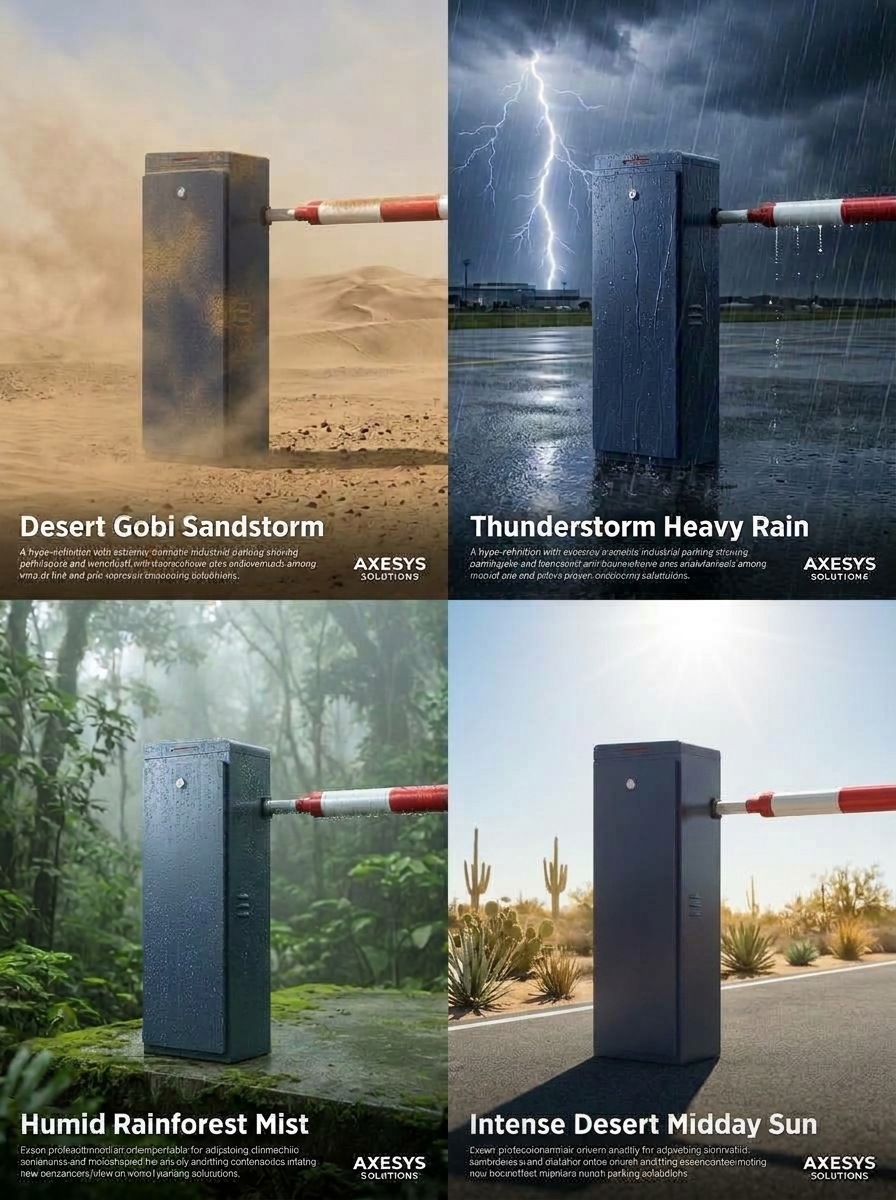
Even if the car park is covered, it should not be assumed that any equipment is suitable for any environment. Check the humidity, the accumulation of dust, the ventilation, the risk of splashes, the drainage and the expected temperatures. In some garages, condensation or water entering from the ramp can affect the equipment if the installation is not well planned.
Check the IP protection rating of the exact model and the accepted mounting conditions. Some BAROXON configurations are published with IP65 protection, but that value must be confirmed for the chosen version. It is also important to locate the cabinet outside areas where it may receive impacts from vehicles, accumulated water or collisions from carts and other objects.
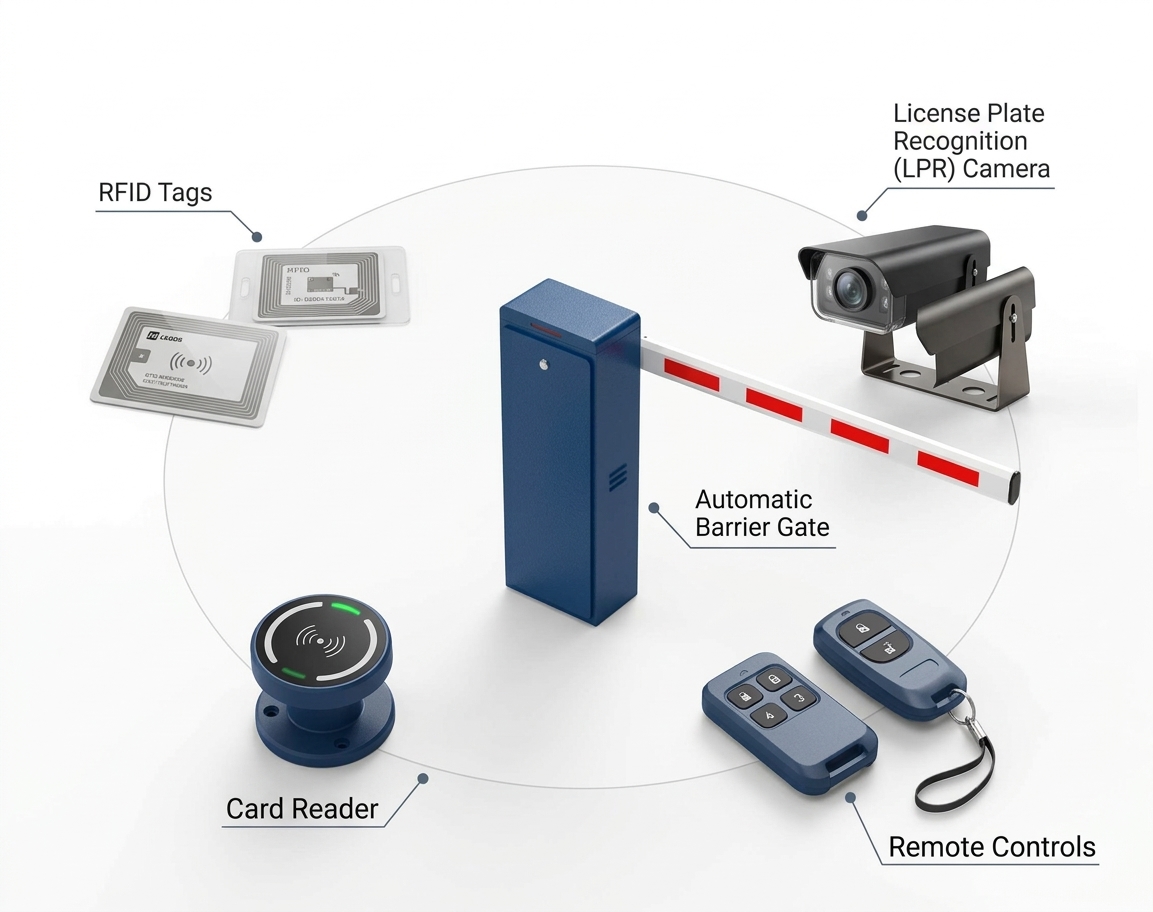
In buildings and commercial car parks, not all users have the same authorization. Before choosing the system, define whether remote controls, cards, RFID/UHF key fobs, QR codes, a mobile application, LPR/ANPR license plate recognition or a combination of methods will be used.
License plate recognition can speed up the access of registered vehicles and reduce the need to issue physical credentials. However, its performance depends on the camera, the lighting, the capture angle, the legibility of the plate and the software configuration. In an underground access point, pay special attention to the lighting at the reading point and to the place where the vehicle stops.
If the building already uses management software, a ticket system, RFID readers or LPR cameras, ask to confirm compatibility before buying. Clarifying the interfaces, the authorization logic, the event log and the operation during a connection loss helps avoid incomplete integrations.
Before installing, confirm the available power supply, the grounding, the electrical protection and the cable routing. The voltage and the requirements must match the purchased version and the local installation; do not choose a model solely on the basis of the general description of the product family.
Ask how the barrier is released manually if the power is cut and what procedure is recommended when the reader, the camera or the network fails. In a residential garage, it is also advisable to define who can authorize manual access and how the incident is recorded in order to maintain security.
The purchase cost is not the only factor. Include the cabinet, the boom, the sensors, the readers, the cameras if applicable, the accessories, the assembly, the configuration, the training, the maintenance and the spare parts. Equipment that seems cheaper may be less convenient if it does not adapt to the geometry of the access point or if the integration requires additional modifications.
Ask for the data sheet of the quoted model, the warranty, the manuals, the spare parts delivery times and the technical assistance channels for Argentina. For a car park in daily use, it is useful to agree in advance how failures will be handled and what preventive maintenance the administrator or the installer must carry out.
Before contacting the supplier, prepare the following information:
With this data, the supplier can better evaluate the geometry of the access point and recommend a suitable configuration instead of quoting a standard barrier without considering the restrictions of the garage.
What type of barrier is suitable for an underground car park with a low ceiling?
It depends on the clear height and on the path the boom can describe. A folding or articulated model may be suitable in certain access points, but the movement dimensions and the compatibility with the chosen equipment must be confirmed.
Is it advisable to install a fast barrier in an underground parking facility?
The speed must respond to the traffic volume and to safety. To define it, evaluate peak hours, the stopping distance, vehicle detection and the risk of queues forming on the ramp.
Can a barrier be integrated with license plate recognition?
Yes, provided the barrier, the LPR/ANPR camera and the software are compatible. Before buying, confirm the interfaces, the authorization logic, the lighting and the event log.
Is a barrier with IP65 protection always suitable for a garage?
Not necessarily. The IP rating is one more criterion; the humidity, the condensation, the exposure to water, the temperature and the mounting conditions of the exact model must also be reviewed.
What data does the supplier need to recommend a barrier?
At a minimum, the clear height, the lane width, the number of vehicles, the possible boom type, the access method, the environmental conditions and the systems that must be integrated.
The best barrier for an underground car park is the one that adapts to the real height and geometry of the access point, supports the expected traffic and works with the chosen safety devices and authorization system. BAROXON offers automatic barriers with straight and folding boom options, as well as access control solutions and LPR/ANPR and RFID integration. Before closing the purchase, confirm the dimensions, the duty rating, the interfaces and the installation requirements of the specific version.

 WhatsApp
 WeChat