Buying a heavy-duty vehicle barrier is not just a matter of choosing a longer boom or a faster motor. For an access point with frequent traffic, the decision must consider the real vehicle volume, the opening and closing cycles, the lane width, the environmental conditions, the safety devices and the integration with the access control system. A suitable selection helps reduce operational interruptions and keeps entry and exit orderly.
In Argentina, a heavy-duty barrier can be installed in a parking lot, a commercial garage, a gated community, a corporate building, an industrial plant or a logistics center. Each environment has different requirements: controlling the entry of private cars is not the same as managing a continuous line of trucks or enabling access during several hours of high demand.
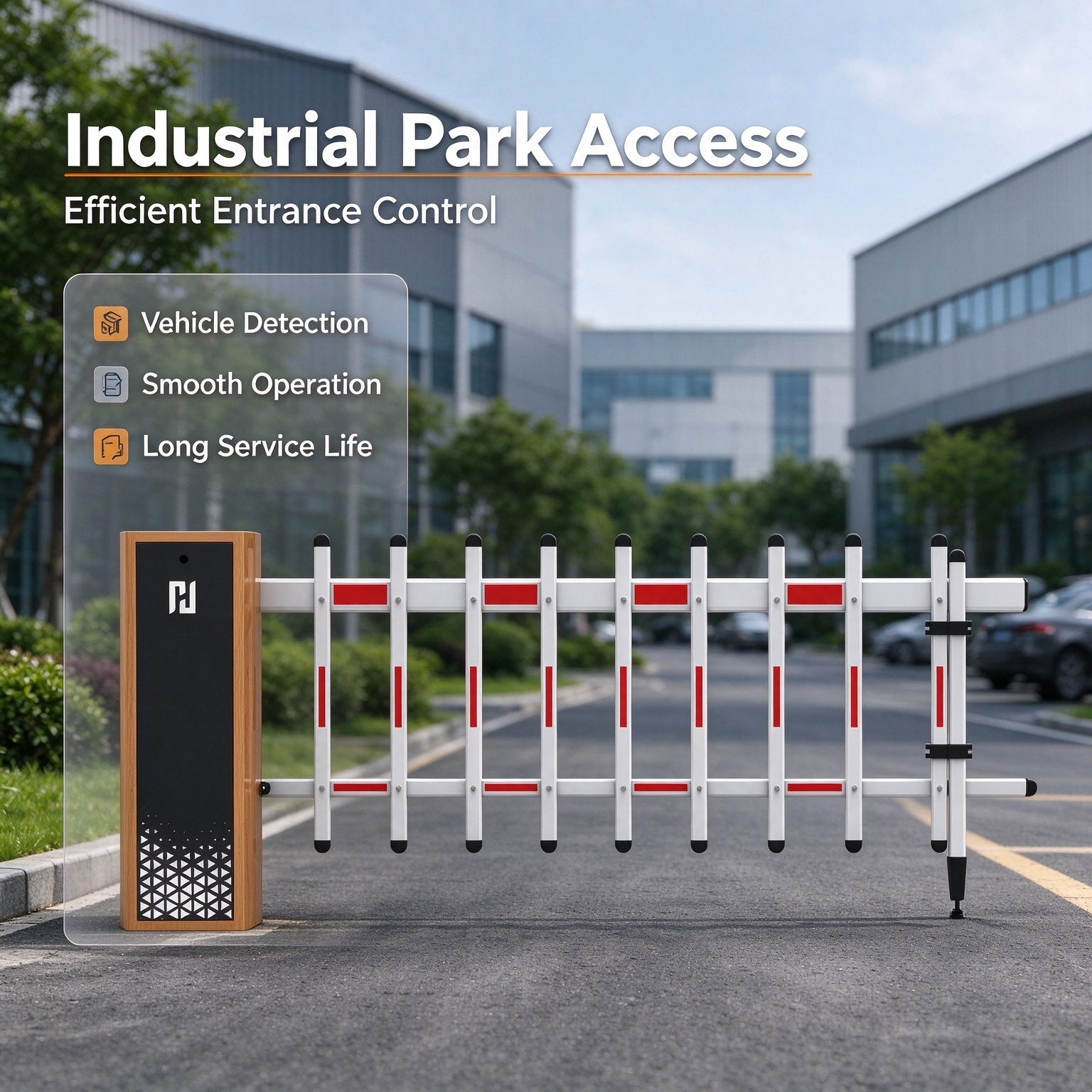
The first step is to estimate how many times the barrier will open and close per day, including the entry and exit peaks. An access point that handles a few vehicles per hour has different needs from a busy parking lot, a gated community guardhouse or a staff entrance at a factory with shift changes.
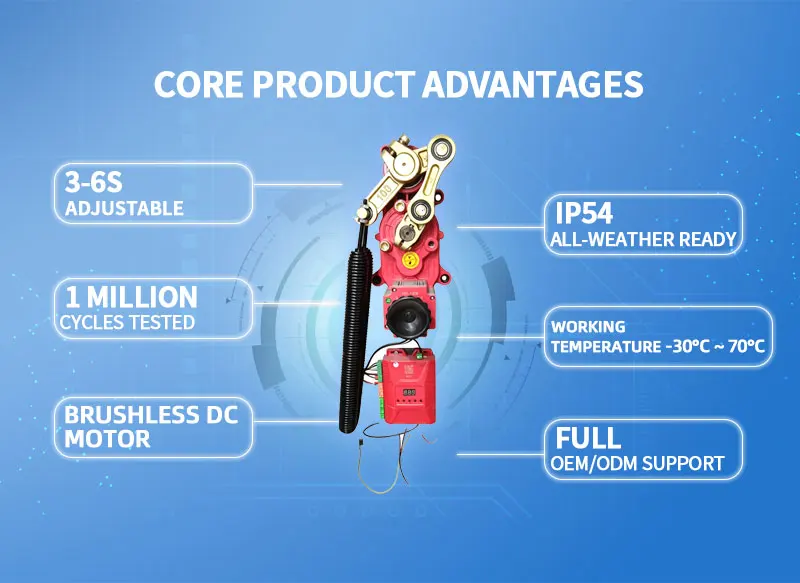
Do not rely only on the expression “heavy-duty” or “intensive use”. Ask the technical data sheet to state the duty rating, the recommended daily cycles and the declared mechanical service life for the specific model. BAROXON publishes configurations for frequent operation and, depending on the model, specifications of up to 5,000 cycles per day and a service life of millions of cycles. Always confirm those values in the data sheet of the quoted version and under the test conditions indicated by the manufacturer.
The motor affects the speed, the smoothness of movement, the consumption and the maintenance needs. In a heavy-duty installation, it is worth comparing the motor type, the availability of spare parts, the ease of diagnosis and the expected working conditions. BAROXON offers configurations with a 24 V direct current brushless motor, as well as other options depending on the product; not all models necessarily share the same motorization.
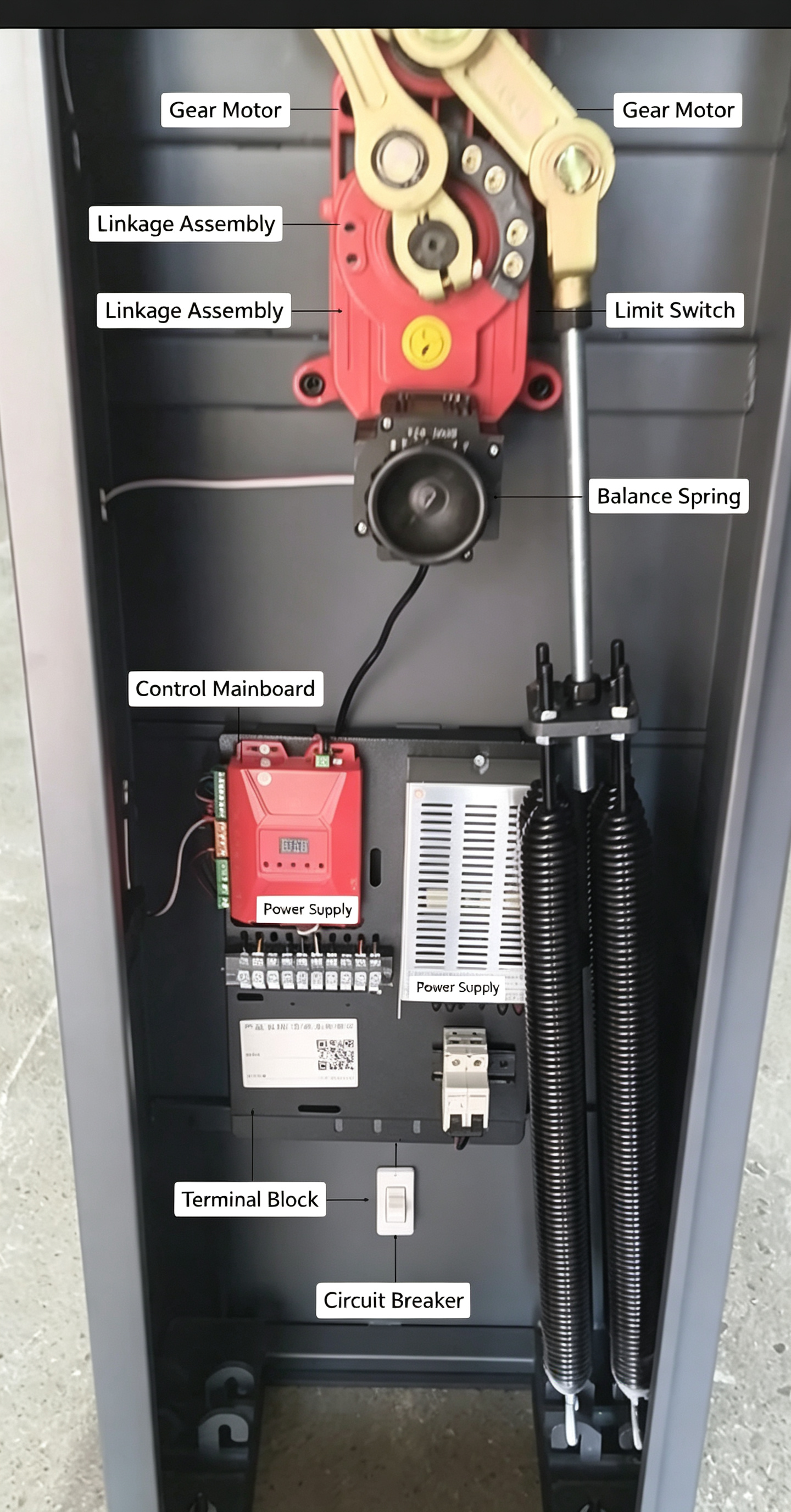
Ask what preventive maintenance the mechanism requires, how the barrier is released manually in the event of a failure and which parts usually need inspection. At critical access points, the ease of diagnosing a fault and restoring service can be as important as the rated opening speed.
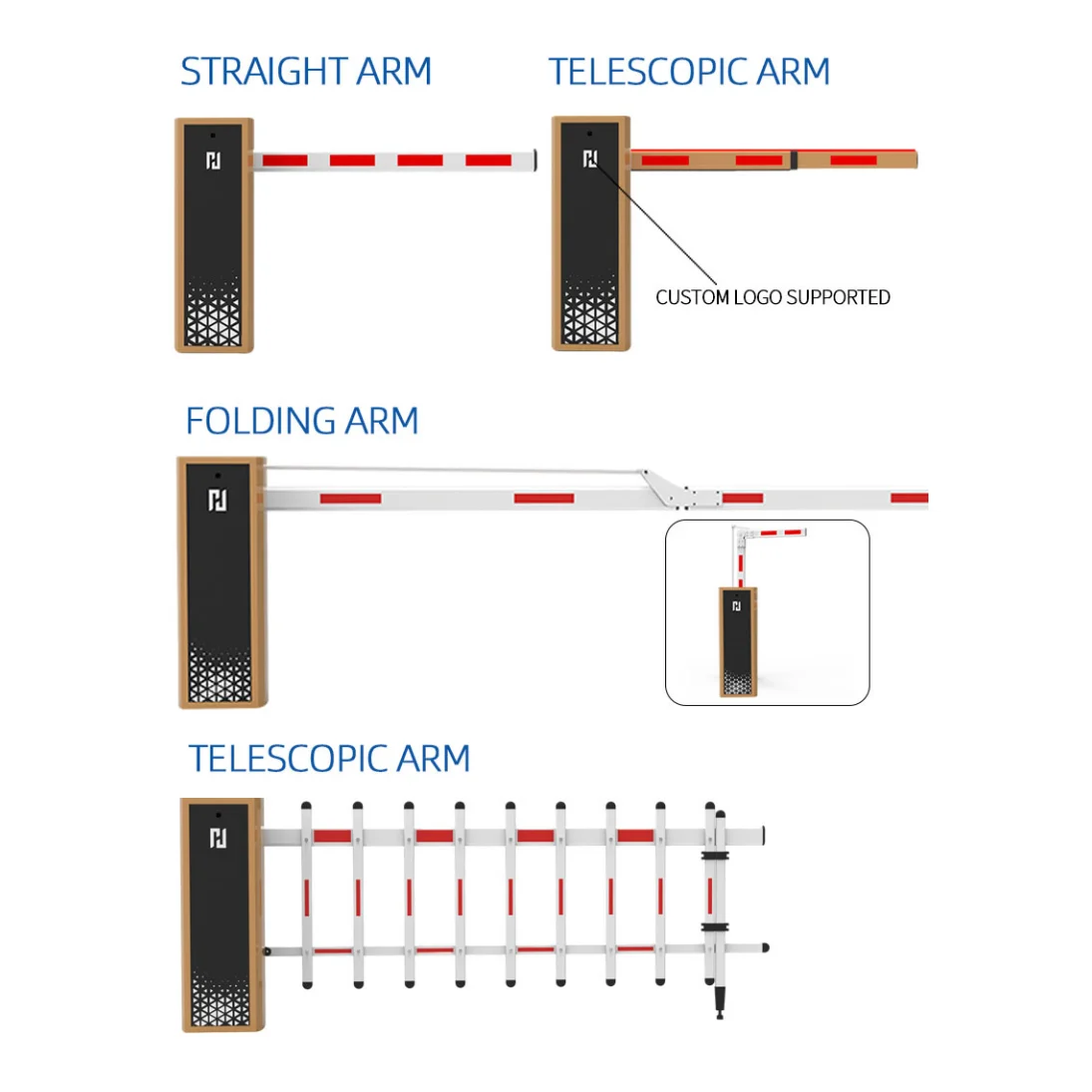
The boom length must cover the usable width of the lane without interfering with columns, booths, signs, lighting or the path of the vehicles. Measure the access point on site and confirm where the barrier cabinet will be located. The configurations published by BAROXON include booms of different lengths, including configurable solutions; the exact range depends on the model and must be validated before buying.
Do not choose the boom only by its appearance. A longer boom or one with more surface area can change the mechanical loads and the exposure to wind. Ask the supplier for the configuration recommended for the lane width, the location and the actual environmental conditions.
If the barrier is to remain outdoors, check the IP protection rating of the exact unit and the temperature and mounting conditions it accepts. Some BAROXON configurations are published with IP65 protection; this does not mean that all versions automatically have the same rating. It is also advisable to verify the cabinet finish, the drainage of the site, direct sun exposure and the possible accumulation of dust or water.
For an installation in a coastal or industrial area or under demanding environmental conditions, describe those conditions when requesting the quote. The selection must be based on the product data sheet and on the actual site conditions, not only on a general commercial description.
In a heavy-duty barrier, speed must be balanced with lane safety. Ask which sensors the system supports, how it detects a vehicle under the boom and which logic prevents a premature closing. Depending on the project, inductive loop detectors, radar sensors, photocells or other compatible devices may be evaluated, always in accordance with the design and the manufacturer's instructions.
The barrier does not replace a complete safety plan. The access point needs visible signage, an appropriate waiting area, operating and maintenance procedures, and a plan for power outages or communication failures. Installation, testing and training must be carried out by qualified personnel.
A robust barrier can work with different identification methods, provided the compatibility of the controller and the associated equipment is confirmed. Before requesting a quote, define whether the access point will operate with a remote control, card, QR code, RFID/UHF, mobile application, LPR/ANPR license plate recognition or a combination of methods.
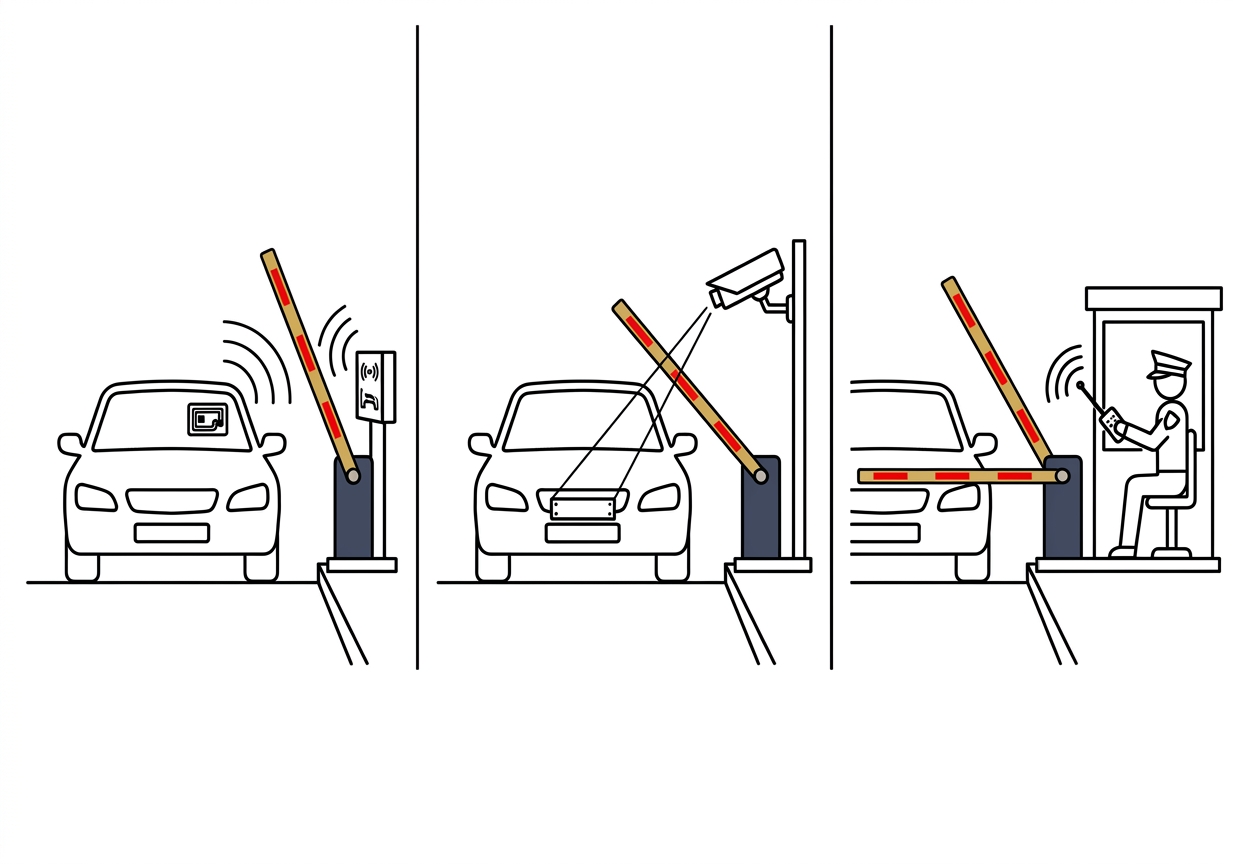
License plate recognition can speed up the entry of authorized vehicles and reduce the dependence on physical credentials, but the result depends on the camera, the lighting, the capture angle, the quality of the plate and the software configuration. To integrate it with a barrier, ask to confirm the interfaces, the connection scheme, the authorization logic and the event log.
If the site already uses parking software, a ticket system, RFID readers, LPR cameras or centralized access control, request a compatibility review before placing the order. It is important to clarify who sends the opening command, what happens if the connection is lost and how entries and exits are recorded.
Ask for documentation of the available interfaces and, where applicable, an integration test with third-party equipment. Do not assume that two devices can be connected just because both are described as “smart” or “compatible with access control”.
The budget must include the equipment, the boom, the sensors, the accessories, the installation, the commissioning, the training, the spare parts and the maintenance. A lower-priced alternative may not be the most convenient if it does not support the traffic volume or if technical assistance and components are difficult to obtain.
Ask about the warranty conditions, the support channels for Argentina, the response times, the availability of manuals and how to request spare parts. For a critical access point, it is advisable to agree in advance how a failure will be handled and which components should be kept available.
To receive a useful technical recommendation, gather the following data:
The more accurate the site information, the easier it will be to compare equivalent proposals and to avoid applying a standard specification to an access point that requires a different solution.
What makes a vehicle barrier suitable for heavy-duty use?
It does not depend on a single feature. You have to review the duty rating, the recommended daily cycles, the mechanical design, the motor, the environmental conditions, the maintenance and the availability of spare parts for the specific model.
How many cycles per day do I need?
Estimate the usual traffic and the entry and exit peaks, and convert that volume into approximate openings and closings. Then ask the supplier to confirm which model is sized for that use and under what conditions its performance was measured.
Does a heavy-duty barrier always need license plate recognition?
No. LPR/ANPR recognition is an option for projects that need to identify vehicles by their license plate. Other access points can work with cards, remote controls, RFID/UHF, QR codes or a combination, according to the operating requirements.
Does IP65 protection guarantee that any barrier can be installed in any outdoor location?
No. The IP rating is only one of the criteria. The temperature, mounting, exposure and maintenance conditions and the specifications of the exact model must also be checked.
What should I ask the supplier before buying?
Ask for the data sheet of the quoted model, the duty rating, the boom dimensions, the protection rating, the compatible safety devices, the integration interfaces, the warranty conditions and the information on support and spare parts.
The best heavy-duty vehicle barrier is the one that is sized for the actual access point: it supports the expected volume, uses a boom compatible with the available space, has the necessary protections and integrates with the chosen identification method. For projects in Argentina, BAROXON offers automatic barriers, configurations for frequent use and integration options with RFID and license plate recognition. The final decision must be based on the site measurements and on the technical documentation of the specific model.

 WhatsApp
 WeChat