The best vehicle barrier for a small car park is not necessarily the fastest or the one with the most features: it is the one that matches the width of the entrance, the space available for the boom to move, the number of vehicles and the level of control you need. In a car park with few spaces, a correctly sized unit can keep entry and exit orderly without taking up extra space or making manoeuvres harder.
In Argentina, a small car park can be the entrance to a building, a private garage, a shop, an office or a car park with few spaces. Each case has different conditions: some entrances have a low ceiling, others share the entry and exit lane, and others need to authorise residents, employees, customers and visitors. It is therefore best to define how the entrance works first and then compare models.
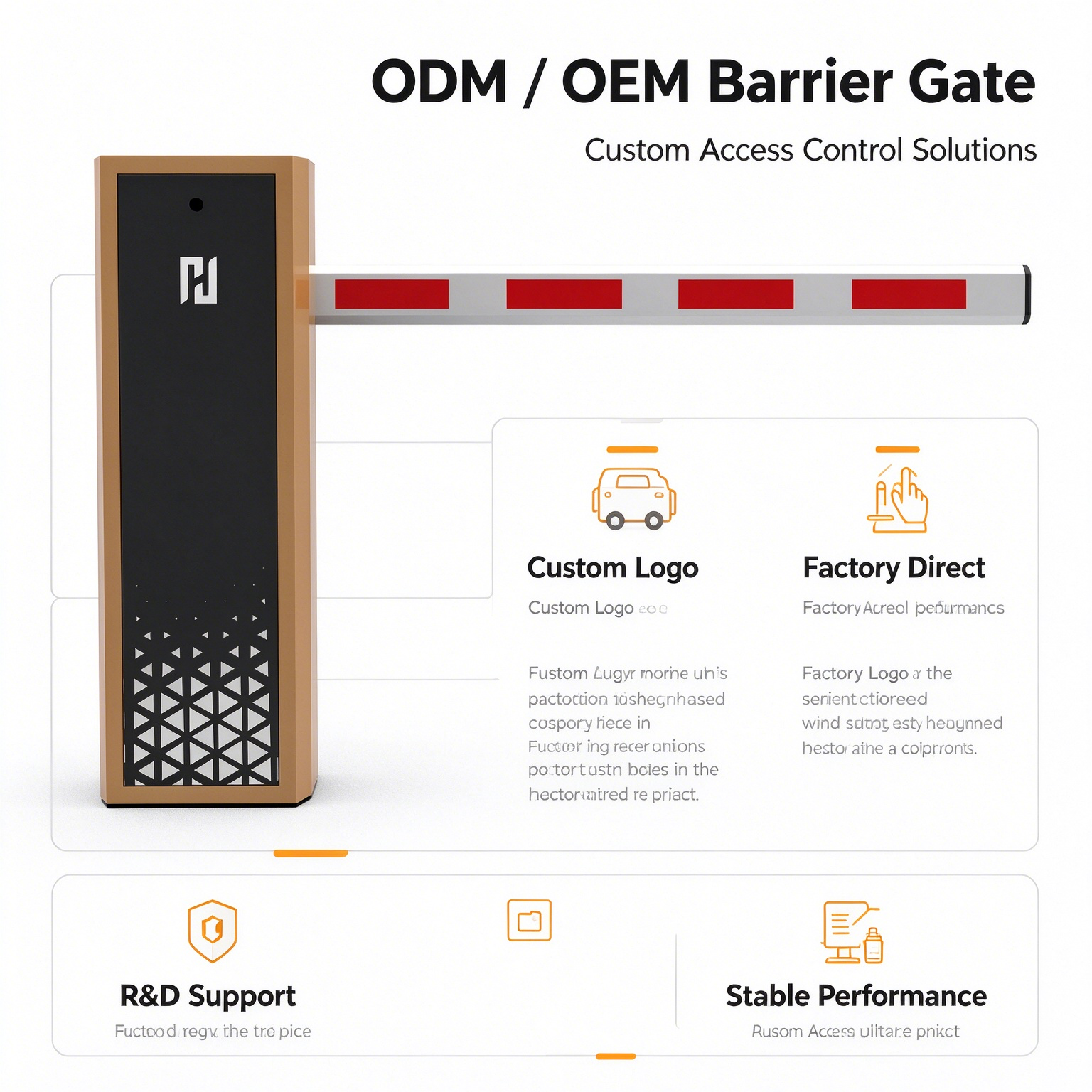
Before asking for a quote, measure the usable lane width, the clear height and the space the boom needs to open and close. Note the position of walls, columns, gates, lights, pipes and signs. Also check where the car will stop and whether the driver can reach the reader or camera without blocking the pavement or the street.
In a narrow car park, a few centimetres can change the installation. Comparing the nominal boom length is not enough: the supplier must confirm the passage width the model covers, the position of the cabinet, the opening direction and the safety zone throughout the movement.
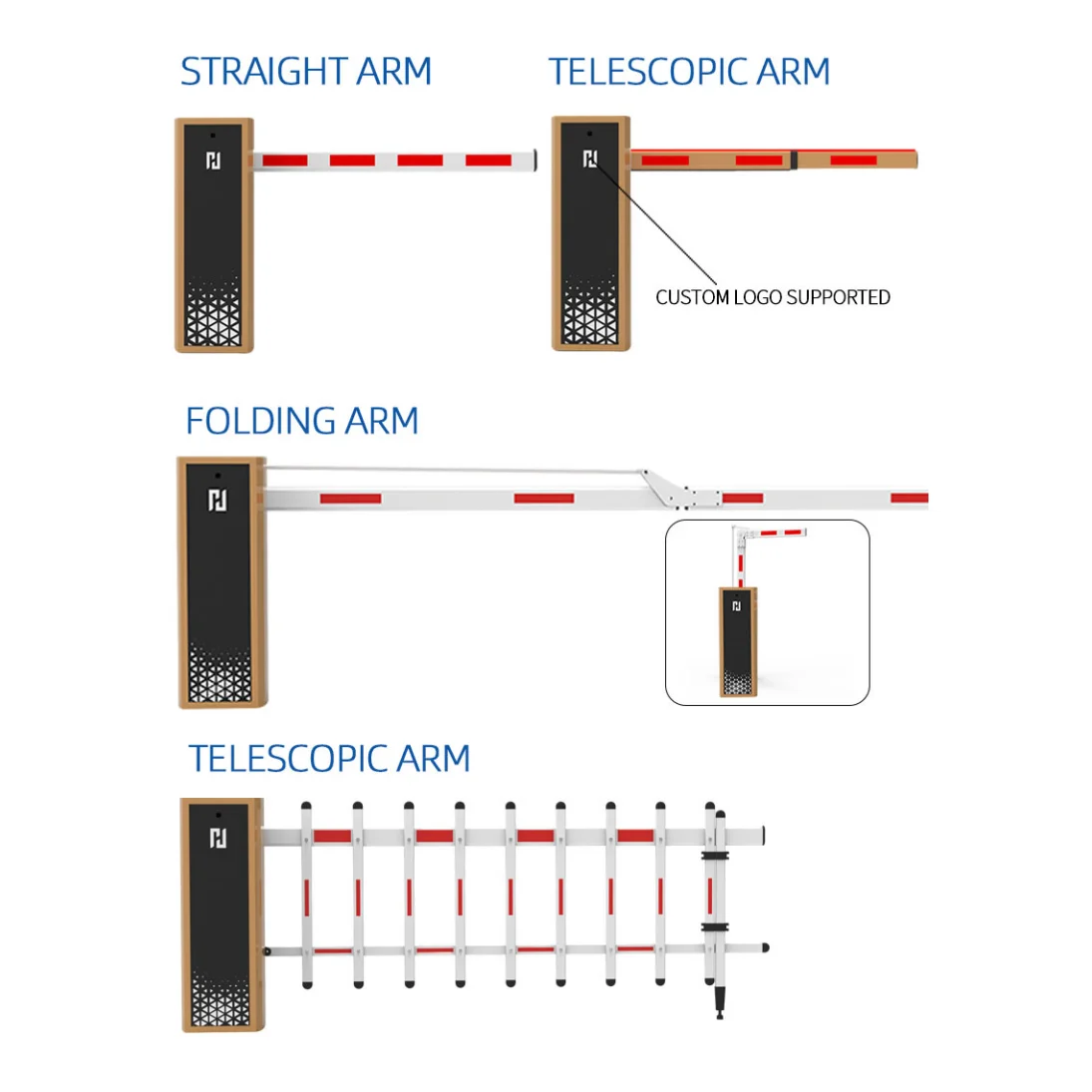
For a small car park with sufficient clear height and unobstructed vertical space, a straight-boom barrier is usually a simple option to assess. Its suitability depends on the lane width, the boom length compatible with the unit and the absence of obstacles along its path.
If the entrance is under a slab, a beam or service installations, it may be worth assessing a folding or articulated boom. BAROXON offers barrier configurations with different boom options, but the choice must be validated against the opening diagram of the specific model: not all folding mechanisms work in the same way, and they do not solve every limited-height situation.
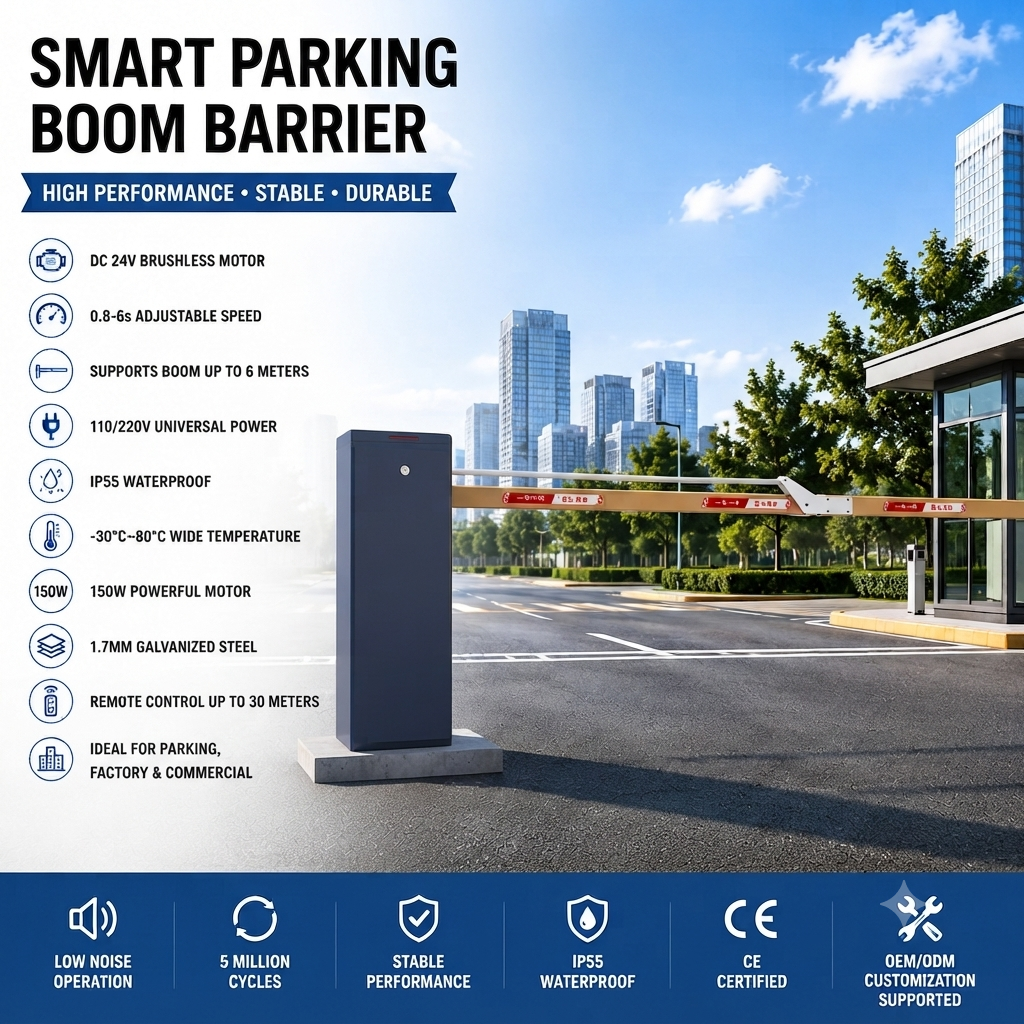
As a practical rule, choose the simplest configuration that solves the real limitations of the site. A more complex boom adds no value if the entrance does not need it; on the other hand, choosing a straight boom without checking the height can cause interference with the ceiling, the lights or the gate.
A private car park or a small residential garage usually has fewer opening cycles than a commercial car park with continuous turnover. Estimate how many cars pass each day and how many are concentrated at peak times. Also take into account visitors, suppliers and service vehicles, not only regular users.
Ask the supplier for the recommended frequency of use and the duty cycle of the exact model. Some BAROXON configurations for intensive traffic publish figures of up to 5,000 cycles per day and a stated service life of millions of cycles; these values depend on the version and its test conditions, so they should not be assumed for the whole range.
For a small car park, an oversized barrier can increase the initial cost without solving a real problem. However, it is also not advisable to buy an overly basic unit if the entrance will see frequent use, multiple users or plans for future automation.
For a private garage, a remote control may be enough if the number of users is small. In a condominium car park or a small office, RFID/UHF card or keyfob readers may be more practical, because they allow credentials to be managed without relying on one remote control per person. The decision should consider how users are added and removed.
Licence plate recognition using an LPR/ANPR camera can be useful when the same vehicles enter and exit regularly and the aim is to reduce manual interaction. For it to work well, check the lighting, the reading angle, the distance to the stopping point, the legibility of the plate and the compatibility between camera, controller and software.
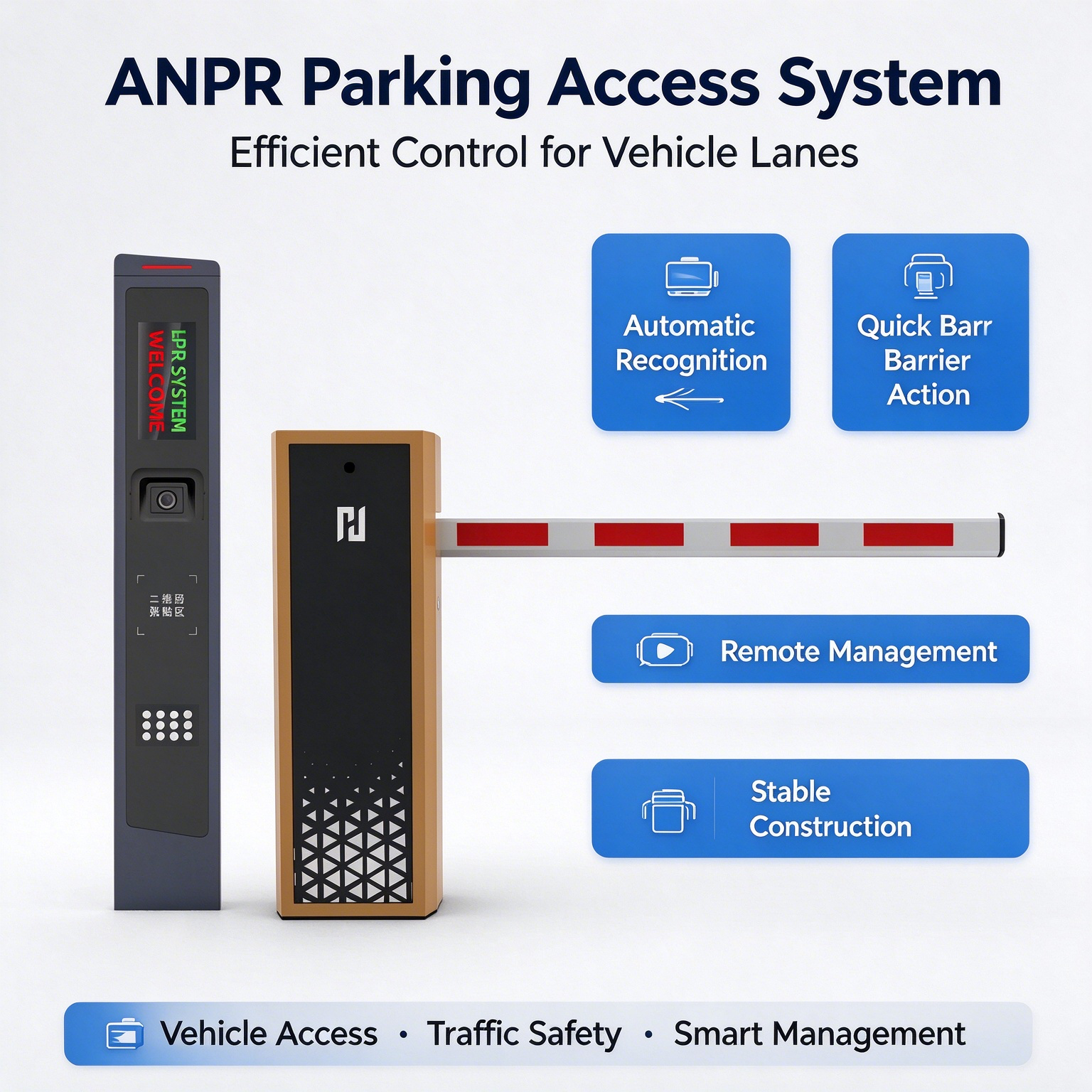
There is no need to install a licence plate recognition system in every small car park. Compare the cost of the complete system with the time it saves, the number of users and the level of records the management needs. If access software already exists, ask for confirmation of the interfaces and of how it operates when the connection is lost before buying.
Even if the car park is small, the boom must not come down on a vehicle that is still passing. Ask which detection devices the model supports, how the opening and closing logic is configured and what happens if a sensor detects a vehicle continuously. Depending on the entrance design, inductive loops, photocells, radar sensors or other compatible devices may be assessed.
Safety also depends on the installation. Define a visible waiting area, prevent cars from stopping under the boom and keep the pedestrian route separate wherever possible. Commissioning tests should check the sensors, the limit switches, the signage and the manual operation procedure.
Confirm the electrical supply available and the requirements of the chosen version. If the cabinet is exposed to moisture, dust, splashes or accidental impacts, check the IP rating and the mounting conditions stated in the datasheet. Some BAROXON configurations are published with IP65 protection, but this must be confirmed for the quoted model.
Before buying, ask how the barrier is released if the power fails, which spare parts are recommended and what preventive maintenance the manufacturer requires. In a small car park, a failure can affect all users, so it is worth agreeing who receives technical assistance and how access is enabled during a repair.
The quote should detail the barrier, the boom, the necessary sensors, the readers or cameras, the accessories, the installation, the configuration, the training and the after-sales support. If the barrier has to be integrated with an existing gate or management software, ask for that work to be specified in writing.
An economical solution can be the best option if it covers the real needs and has adequate support. But the lowest initial price does not always mean a lower long-term cost: a barrier that is incompatible with the space, the traffic volume or the access system can lead to modifications, delays and additional expenses.
What is the best barrier for a small car park?
The best option is the one that covers the width of the entrance, moves without interference, withstands the frequency of use and supports the required authorisation method. To choose it, measure the site and confirm the datasheet of the model.
Is a straight or a folding boom better?
A straight boom may be suitable if there is enough height. A folding boom can solve certain height restrictions, but the full travel path and the compatibility of the mechanism with the unit must be checked.
Does a small car park need licence plate recognition?
Not always. LPR/ANPR can be useful when registered vehicles enter frequently and authorisation needs to be automated. If there are few users, a remote control or RFID may be simpler and cheaper.
What information should I send to request a quote?
State the lane width, the clear height, photos or a plan of the entrance, the estimated number of vehicles per day, the possible boom type, the access method and the systems that need to be integrated.
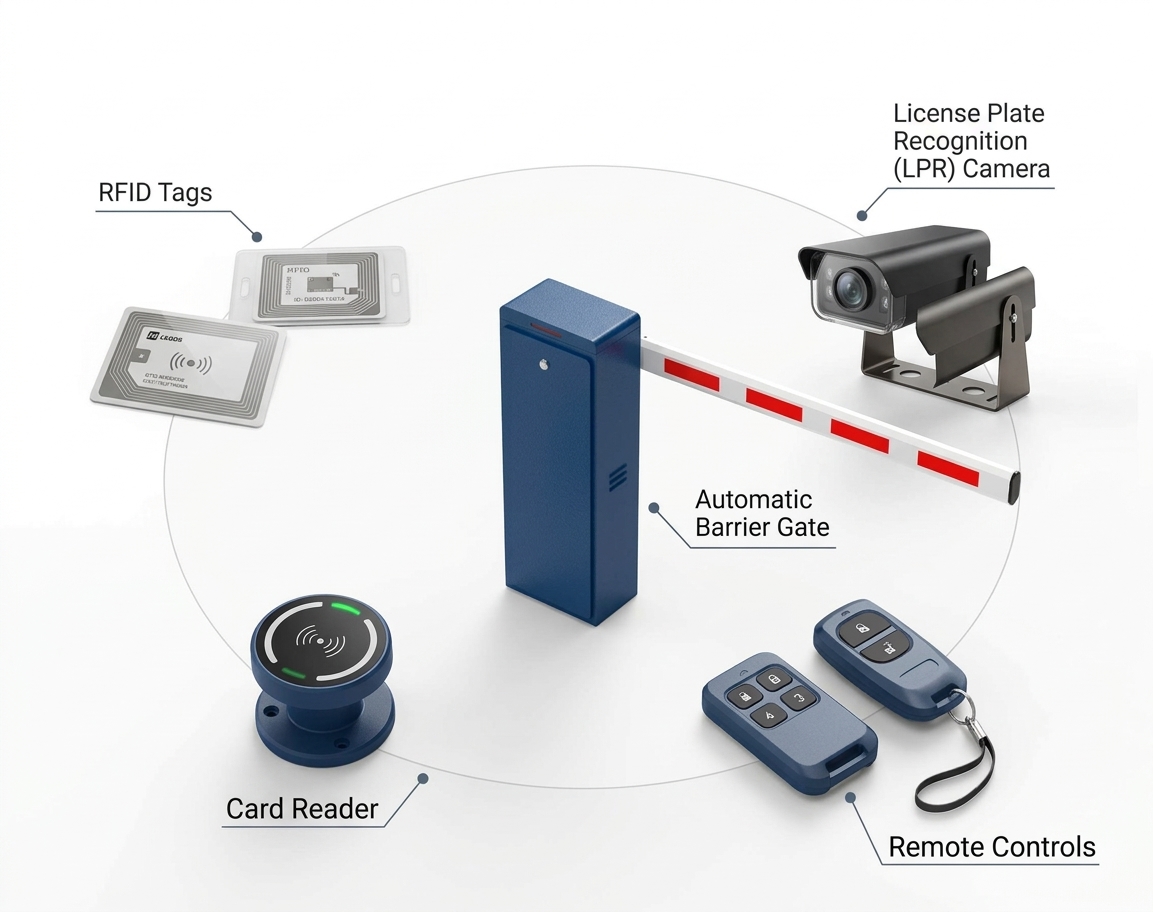
For a small car park in Argentina, start with the dimensions and the real use of the entrance. Choose between a straight and a folding boom according to the available height; size the unit according to daily cycles; define the access control that is easiest to administer; and keep vehicle detection, operation during failures and technical support among the main requirements. BAROXON offers automatic barriers and RFID and LPR/ANPR integration options; the final configuration must be confirmed for the specific model and site conditions.

 WhatsApp
 WeChat