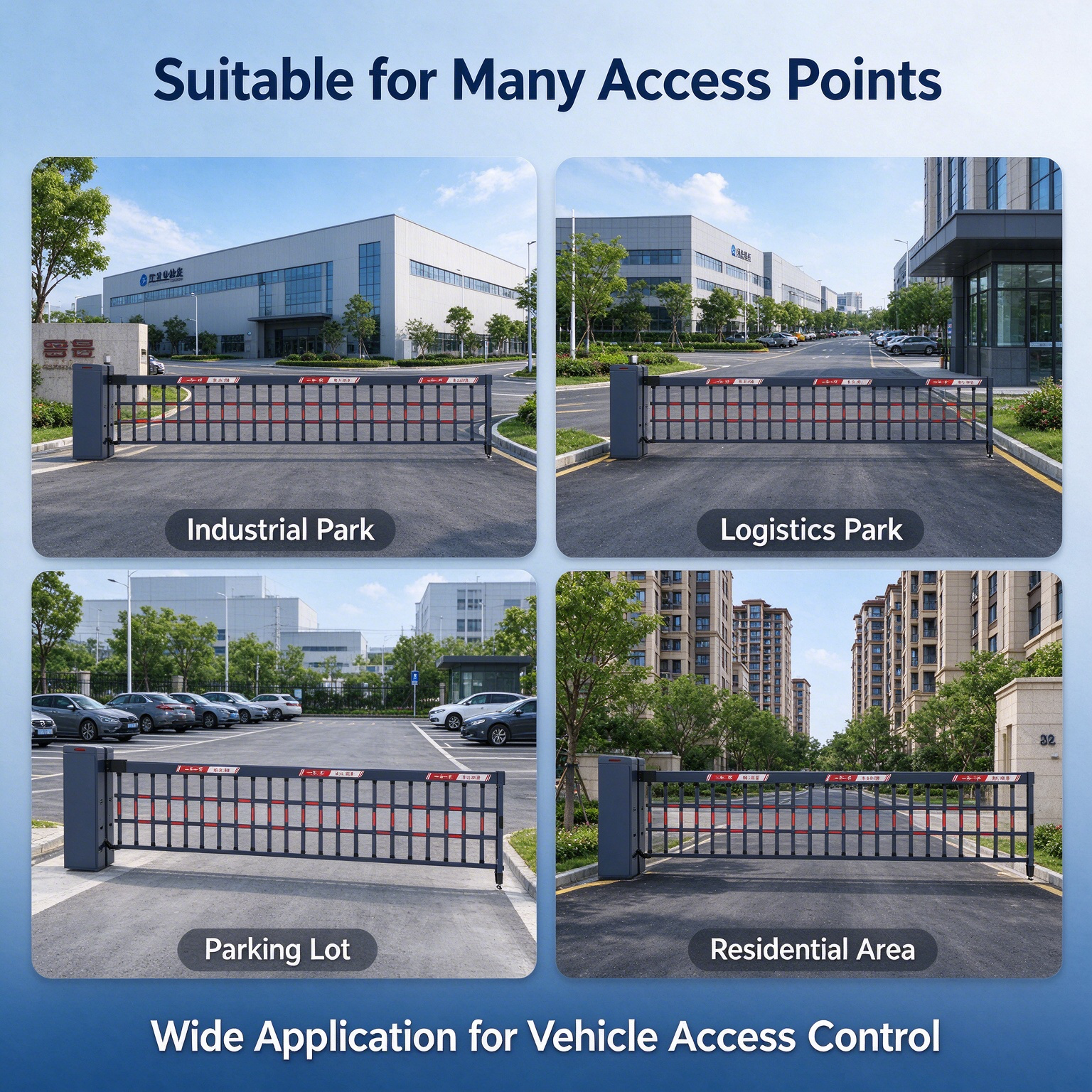
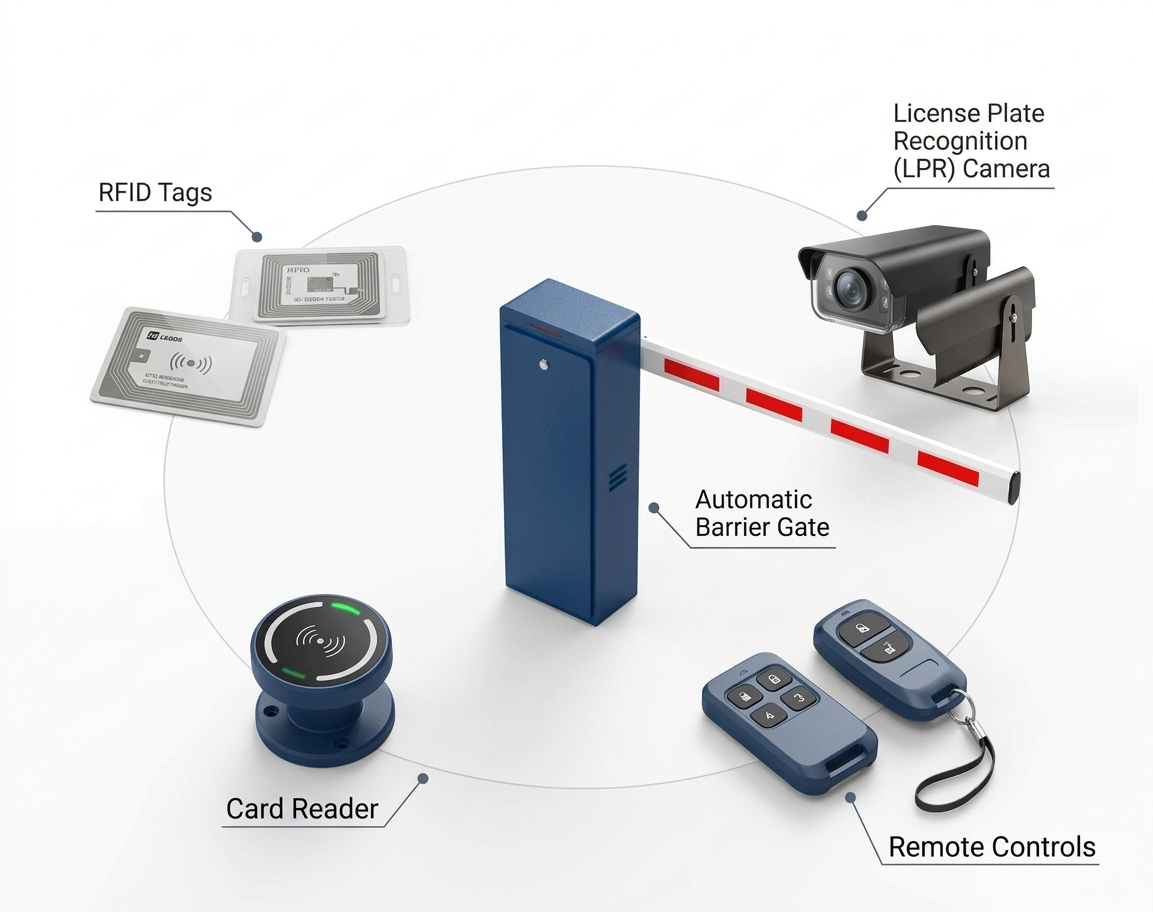
An automatic vehicle barrier is a device that controls the entry and exit of vehicles by means of a boom that rises and lowers to open or block a lane. It is used in parking garages, commercial parking lots, gated communities, corporate buildings, logistics centers and industrial access points. When integrated with RFID readers, remote controls, license plate recognition (LPR/ANPR) cameras or parking software, it allows traffic to be managed in a more orderly way and authorized access events to be recorded.
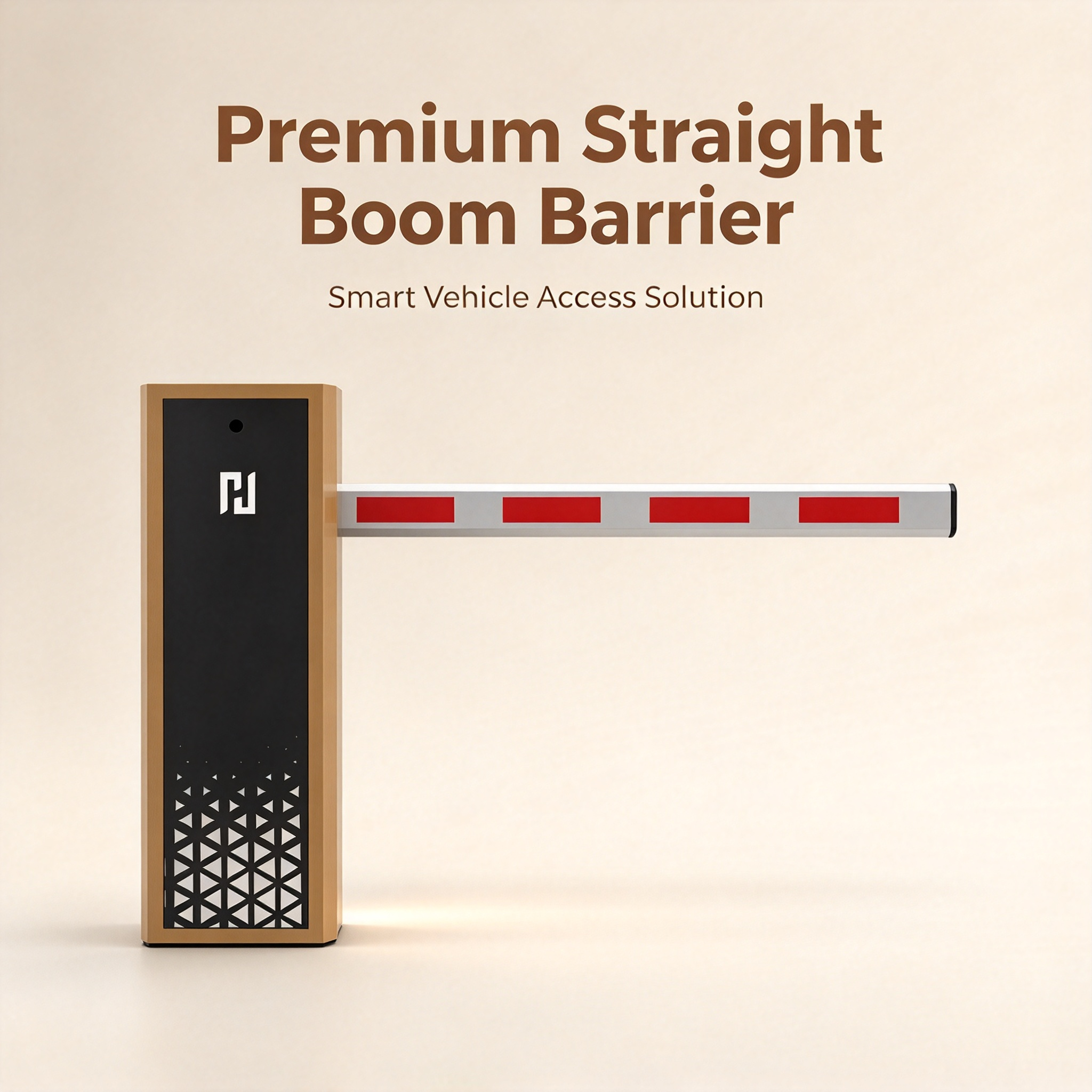
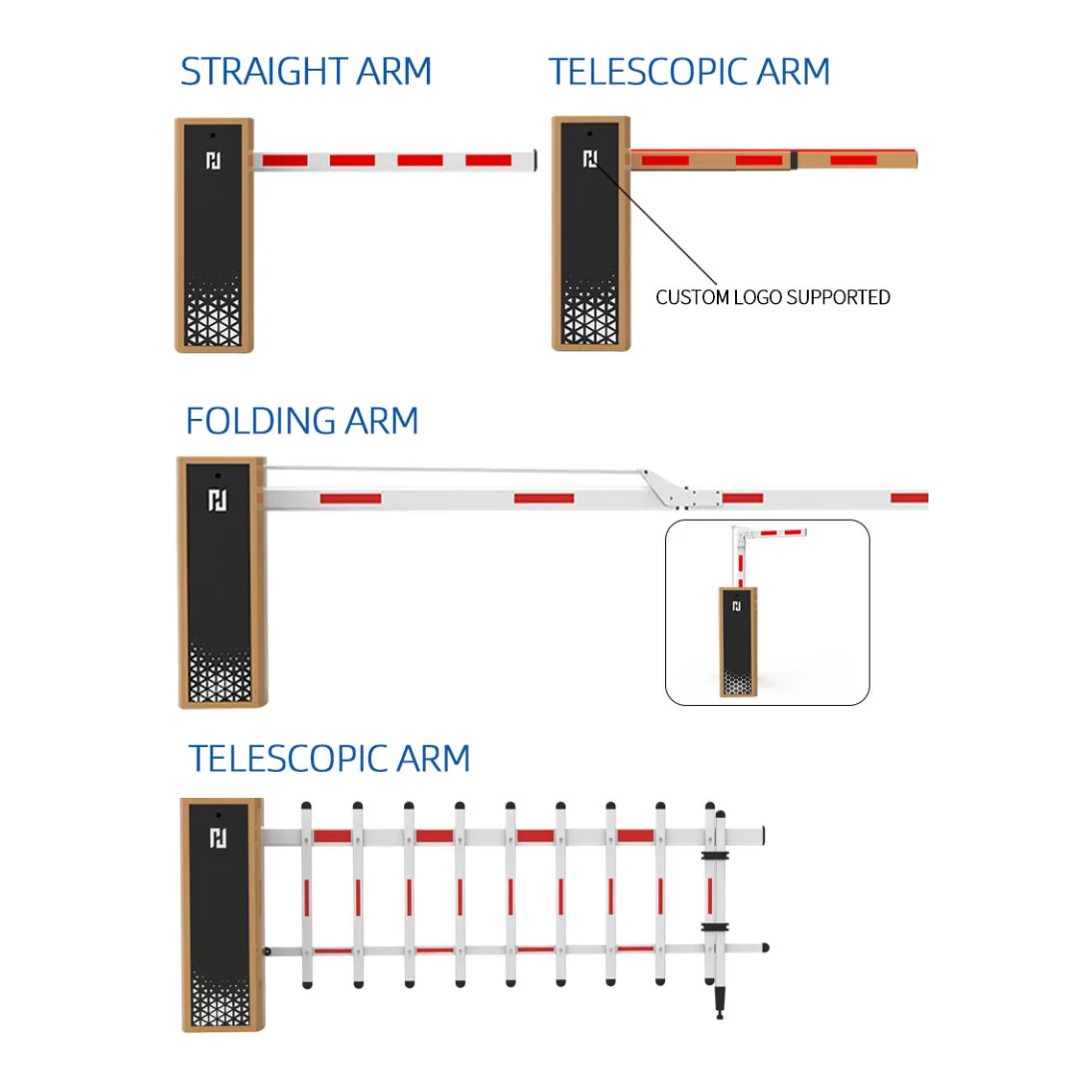
Its main function is to regulate the passage of vehicles and help ensure that every entry corresponds to a defined authorization. Depending on the configuration, opening can be triggered by a remote control, a card, a QR code, an RFID/UHF tag, a mobile app, an LPR camera or a guard post. In facilities with higher traffic volumes, the barrier can be connected to a management system to centralize permits, schedules and records.
In Argentina, needs vary from one site to another. In a gated community it may be important to distinguish residents, visitors and suppliers; in a commercial parking garage, to speed up entry and exit; and in a logistics plant, to control trucks, shifts and loading lanes. The choice should therefore start from the lane width, the available height, the frequency of use, the type of vehicle and the required identification method.
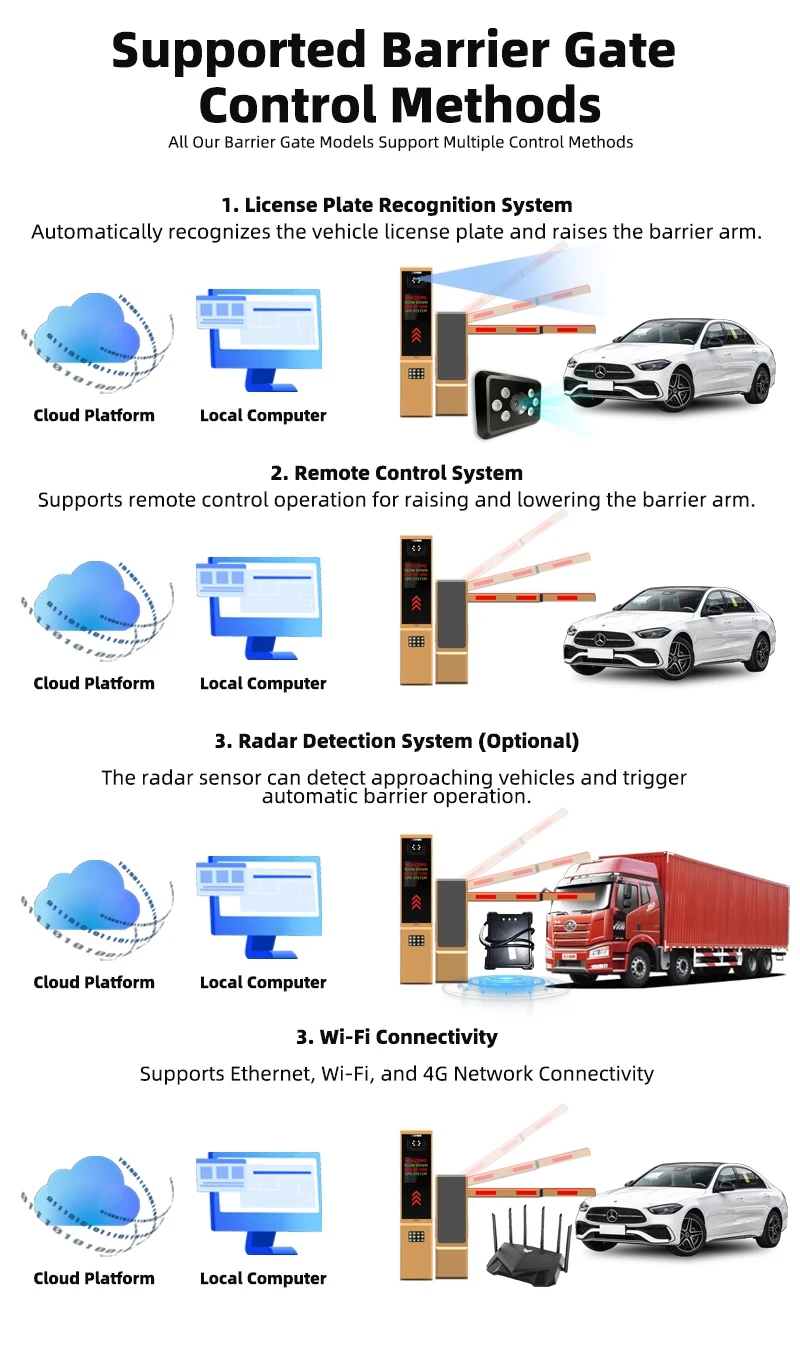
The straight boom barrier is a common option for entrances with sufficient clear height and a simple lane geometry. It is used in parking garages, parking lots, office access points and vehicle control areas. Before defining the boom length, the usable lane width must be measured and it must be verified that the movement does not interfere with vehicles, pedestrians, signs or nearby installations.
The folding boom is designed for access points where a straight barrier would not have enough space to rise, for example in covered parking garages or entrances with height restrictions. The folding angle and configuration must match the actual clear height and the installation conditions. Choosing it by appearance is not enough: dimensions, boom travel and model specifications should be confirmed.
The fence-type barrier adds additional elements to the boom to delimit the passage more visibly. It can be useful at certain controlled access points, provided that its design is suitable for the lane and does not create additional risks. The selection should take into account the maneuvering space, driver visibility, wind and the site's safety requirements.
At access points with frequent traffic, such as busy parking lots, shopping centers, industrial plants and logistics centers, attention should be paid to the duty cycle, opening time, mechanism durability and spare parts availability. BAROXON offers configurations with a 24 V DC brushless motor, IP65 protection and adjustable opening speeds depending on the model and test conditions. Final values must be confirmed in the technical data sheet of the quoted version.
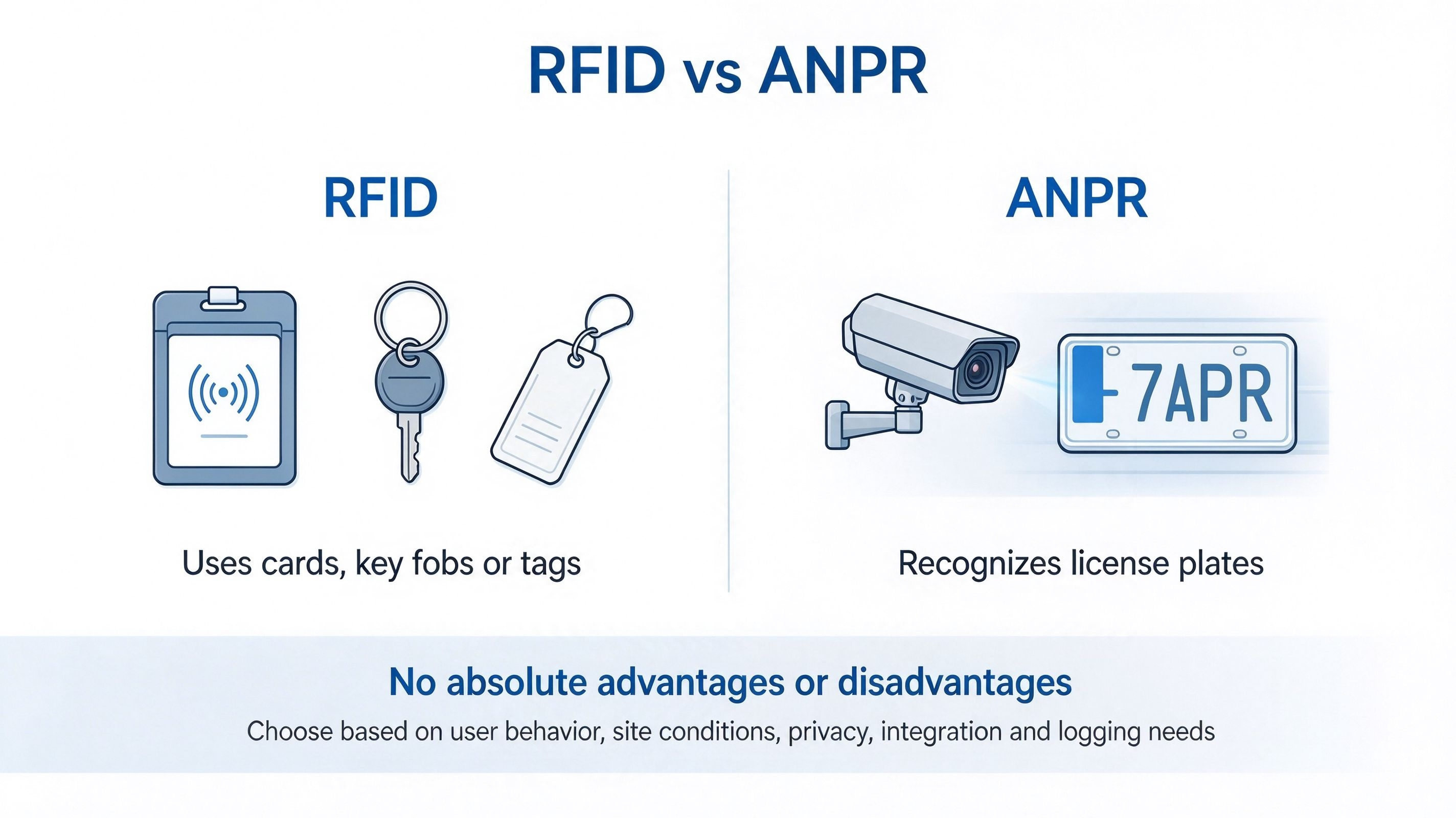
An LPR/ANPR system uses a camera and software to read the vehicle's license plate and compare it with a list of permits or access rules. If the reading and the authorization meet the configured conditions, the system sends the opening command to the barrier. This approach can reduce dependence on tickets or physical credentials, although its performance depends on the camera, lighting, angle, plate quality and system integration.
Although equipment varies by model, the usual process includes five stages:
The barrier should not be regarded as a stand-alone safety device. The project must define suitable sensors, visible signage, opening and closing logic, manual emergency procedures and periodic maintenance. Installation and commissioning must follow the manufacturer's instructions and the standards applicable to the site.
In building parking garages, parking lots and shopping centers, a barrier can organize entry and exit flows and work together with a ticket, payment, card or license plate recognition system. To avoid queues, the lane and the cycle time should be sized according to peak demand hours.
In a gated community or residential complex, the system can differentiate residents, visitors and suppliers through credentials, remote control or LPR. It is important to define who manages permits, how visitors are authorized and what procedure applies if the connection fails or power is cut.
Industrial access points usually need control of trucks, schedules, fleets and supplier vehicles. The barrier should be chosen taking into account vehicle width, operating frequency, night visibility and safety detection. For very wide lanes or special conditions, a specific technical specification should be requested instead of extrapolating data from a standard model.
In facilities with extended or continuous operation, reliability, planned maintenance and integration with other systems become especially important. The solution should be designed based on actual traffic, operational requirements and the operator's contingency plan.
Yes, provided that compatibility between the barrier controller, the readers and the management system is confirmed. Configurations can include cards, long-range UHF tags, QR codes, mobile apps, LPR/ANPR cameras and parking software. Before buying, it is advisable to request the connection diagram, the available interfaces, the network requirements and an operating test with the third-party equipment involved.
A maintenance routine should include visual inspection of the boom and the cabinet, checking of fastenings, the condition of the sensors, the response of the controls, the operation of the safety devices and cleaning according to the manufacturer's instructions. Frequency depends on traffic volume, environment and model. Any internal adjustment or electrical work must be carried out by qualified personnel with the equipment isolated from the power supply where applicable.
Is a vehicle barrier the same as a parking barrier?
In everyday use, the terms often overlap. “Vehicle barrier” emphasizes the function of controlling the passage of vehicles, while “parking barrier” usually refers to the equipment applied to a garage or parking lot. To specify a product, it is more useful to define the lane width, the boom type, the traffic volume and the control system.
What type of boom do I need: straight or folding?
It depends mainly on the clear height and the space available for movement. A straight boom is usually appropriate when there is sufficient height; a folding boom can solve certain low-ceiling entrances. Actual dimensions and the installation plan must be verified before confirming the model.
Can the barrier open automatically when it recognizes a license plate?
Yes, if it is integrated with an LPR/ANPR system and the authorization rules are correctly configured. The result depends on the camera, the location, the lighting, the condition of the plates and the integration between the software and the barrier controller.
What information should I send to request a recommendation?
Prepare the lane width, the clear height, the vehicle types, the approximate traffic volume, the environmental conditions and the desired identification method. It is also advisable to indicate whether there is already parking software, a ticket system or an access control system that must be integrated.
The right vehicle barrier is not chosen only by price or opening speed. It must respond to the dimensions of the access point, the frequency of use, the boom type, the identification needs, the safety requirements and the possibility of integration with existing systems. For a project in Argentina, BAROXON offers automatic barriers, RFID solutions, LPR/ANPR license plate recognition systems and access control options; the final configuration must be validated with the site measurements and the technical data sheet of the chosen model.

 WhatsApp
 WeChat