An automatic vehicle barrier (also called an arm barrier, parking barrier or boom barrier) is a motorized device that allows or prevents vehicles from passing by means of an arm that rises and lowers. It is used in garages, parking lots, gated communities, corporate buildings, industrial plants, logistics centers and controlled access points. Instead of relying solely on a person to open the gate, the system can work with remote controls, cards, RFID tags, QR codes or license plate recognition cameras (LPR/ANPR).
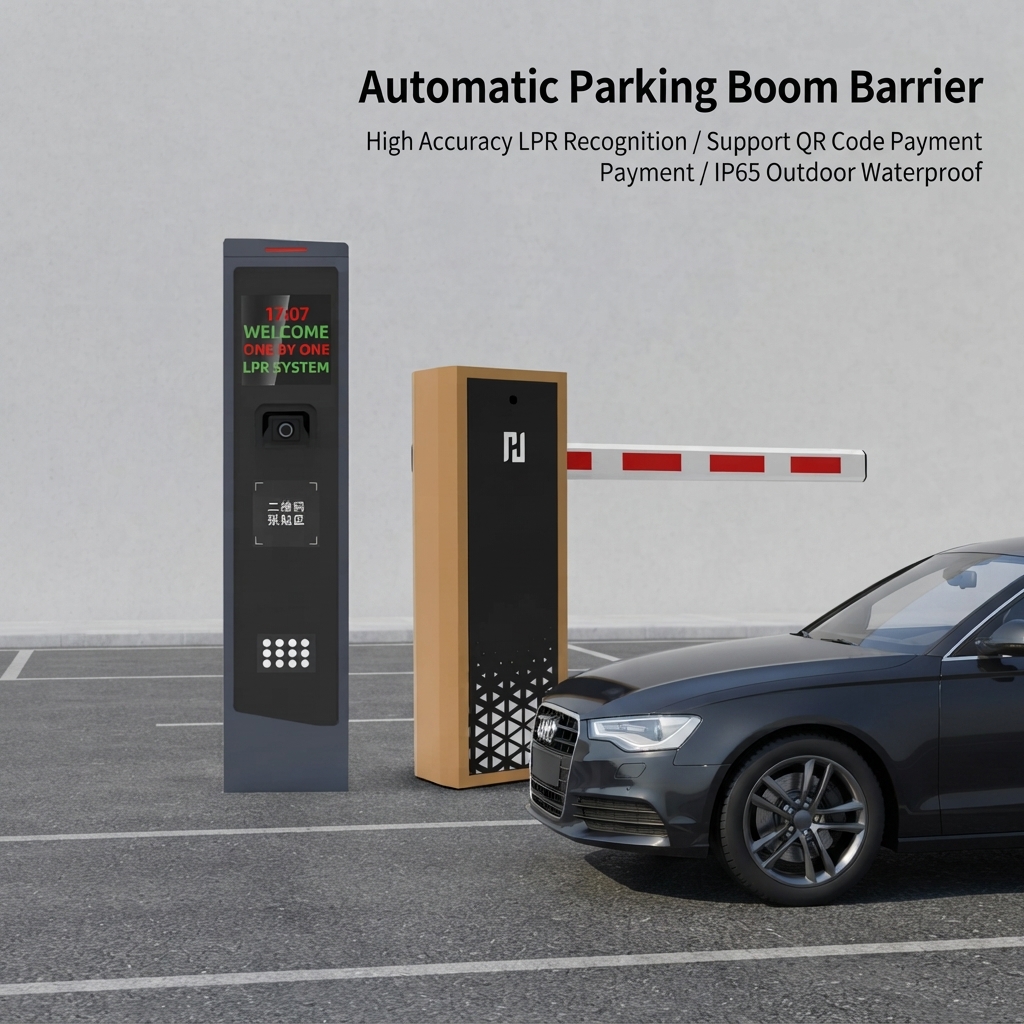
Its main function is to organize entry and exit, restrict access to authorized vehicles and improve the traceability of movements. Depending on the installation, it can help reduce queues, speed up entry during peak hours and keep access records when connected to a reader, a camera or management software. The barrier does not by itself replace a comprehensive security plan: it must be combined with signage, speed control, sensors and appropriate procedures for pedestrians and vehicles.
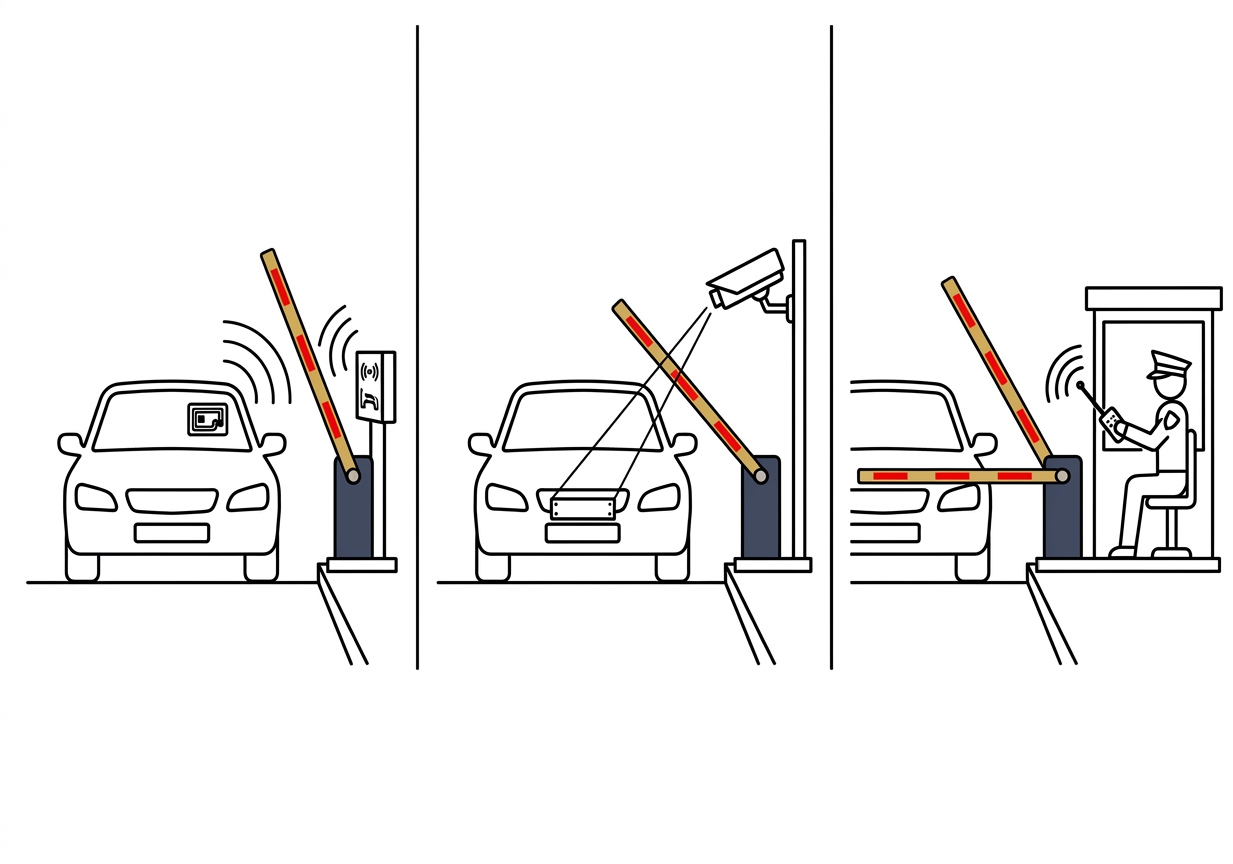
Normal operation follows a simple sequence: the system identifies an access request, verifies authorization, activates the motor, raises the arm, allows passage and closes again when the movement area is clear. The exact logic depends on the controller, the identification devices and the sensors installed. In a residential garage, a remote control or a tag may be enough; in a commercial parking lot, license plate recognition and the payment system can be integrated.
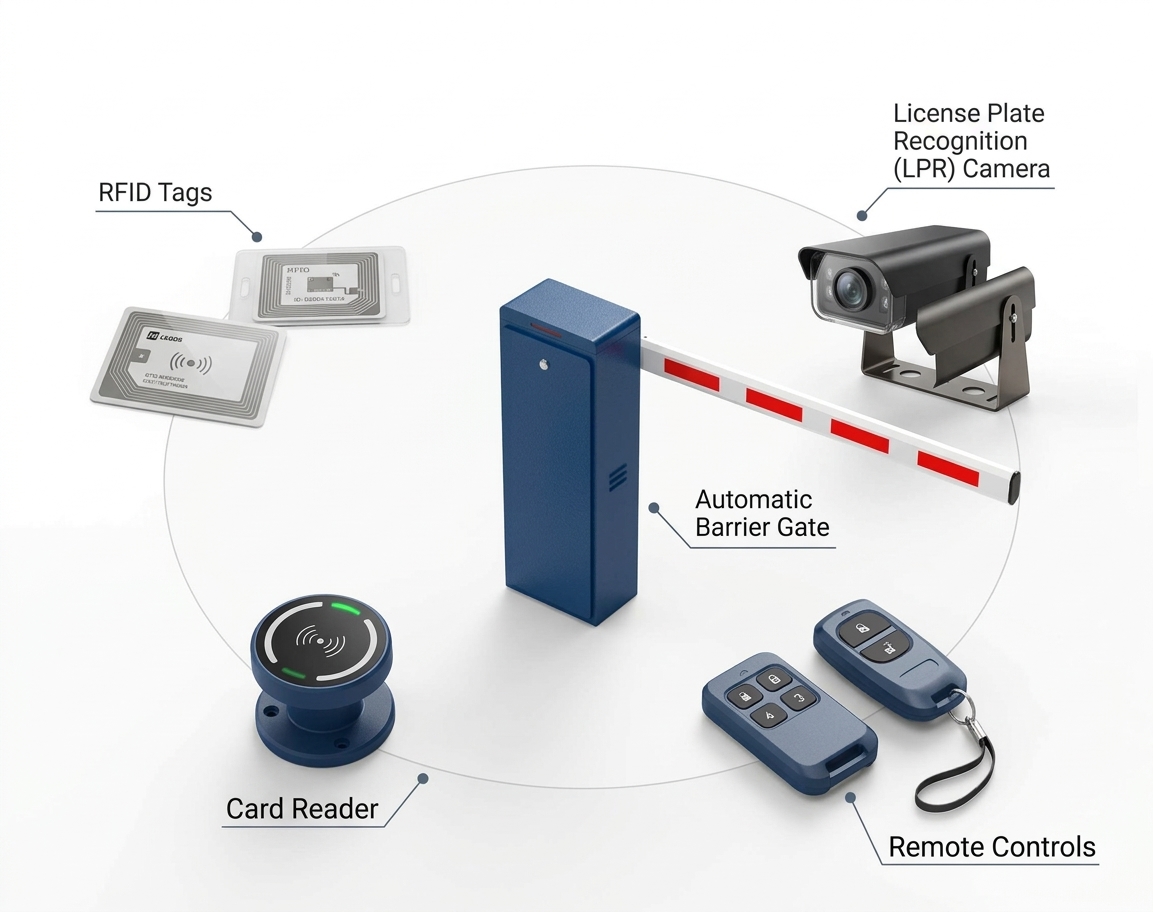
1. Detection or entry request. The driver presents a credential, uses the remote control, scans a code or approaches an LPR/ANPR camera. In installations configured for automatic reading, the camera tries to recognize the license plate and compare the result with the access rules.
2. Validation. The controller or the software checks whether the credential, the license plate or the request is authorized to enter. If authorization is not confirmed, the barrier must remain closed and the system may request assistance from staff.
3. Arm opening. Once the operation is authorized, the controller drives the motor and raises the arm. The speed and opening time depend on the model, the length and type of arm, and the configuration chosen for the site.
4. Vehicle passage and safety control. The vehicle crosses the lane. The appropriate sensors must detect its presence when applicable and prevent a dangerous closure. The selection and location of sensors must be defined according to the access design, the manufacturer's instructions and the applicable standards.
5. Closing and logging. When the movement area is clear and the control logic allows it, the arm lowers and the system is ready for the next vehicle. If integrated with software, the event can be recorded for auditing, parking management or visitor control.
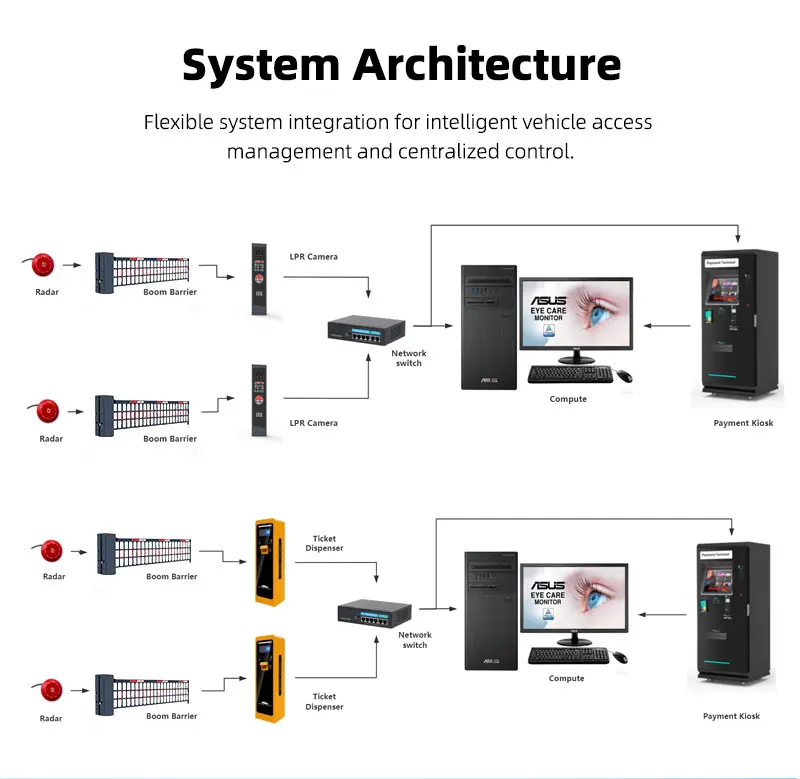
Straight-arm barrier. It is a common option for access points with sufficient clear height, such as parking lots, buildings and company entrances. The arm length must match the actual lane width and the site conditions.
Folding or articulated arm barrier. It can be useful when there are low ceilings, ramps or height restrictions. Before choosing it, the available space during the entire arm travel must be checked.
Fence-type barrier. Its structure with vertical elements can be appropriate when the project requires a more marked visual and physical separation of the lane. The choice must consider vehicle flow, visibility and the site's safety requirements.
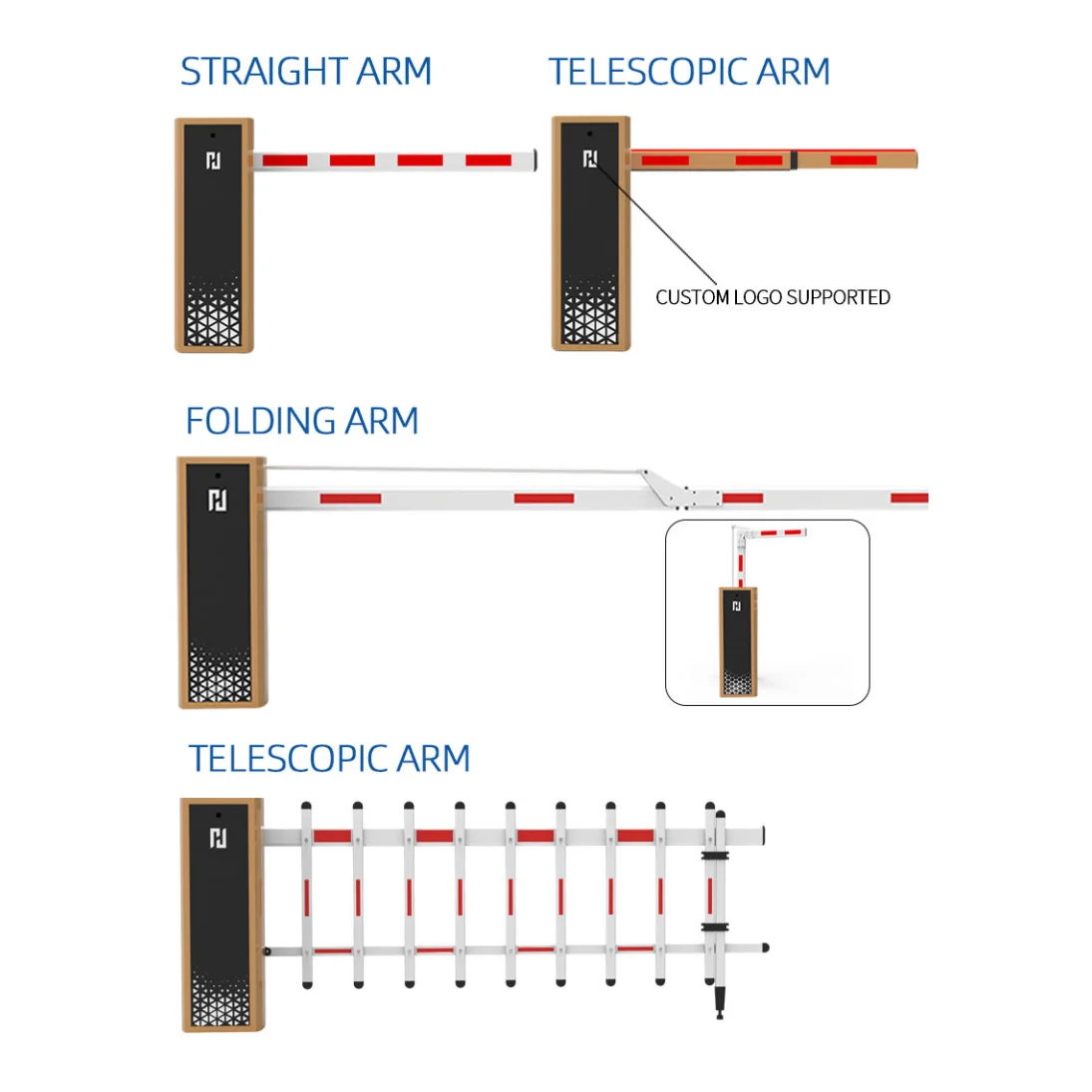
An automatic barrier can work independently or be part of an access control system. Common integrations include:
A barrier should not be chosen solely on price or advertised speed. Before requesting a quote, it is advisable to confirm:
The range published by BAROXON describes configurations with a 24 V DC brushless motor, straight, folding or fence-type arms, integration with RFID and LPR/ANPR cameras, and options for commercial and industrial use. The technical page reports specific ranges and performance figures for certain models; therefore, before publishing figures such as maximum length, opening time, duty cycles or IP rating, they must be verified in the datasheet of the exact model to be quoted. Not all values apply to all equipment.
The barrier must be installed on a stable base and with the arm balanced according to the manufacturer's instructions. The movement area must be marked out, visible signage must be placed, the sensors must be configured correctly and pedestrians must be kept out of the vehicle lane. The system must be installed, tested and maintained by competent personnel. In the event of a power outage or failure, the manual release procedure must be defined and communicated to those responsible.
Is a vehicle barrier the same as an automatic gate?
Not exactly. An arm barrier controls the lane with a boom that rises and lowers; an automatic gate usually opens a sliding or swing leaf. The choice depends on the space, the level of control and the type of closure required.
Can it open automatically when it recognizes a license plate?
Yes, if the barrier is integrated with an LPR/ANPR camera and compatible software, and if the recognized plate meets the configured authorization rules. Performance depends on the camera, lighting, angle, vehicle speed and installation quality.
What arm length do I need?
It is determined by the lane width, the side obstacles, the space for the cabinet and the operating conditions. At industrial or very wide access points, it should not be assumed that a standard arm is enough: a configuration designed for that site must be requested.
What information should be sent to request a quote?
Indicate the lane width, clear height, estimated vehicle volume, type of access, desired authorization method, weather conditions and any existing system that must be integrated. With that data, the supplier can recommend a configuration and confirm the specifications.
An automatic vehicle barrier is much more than an arm that rises and falls: it is part of a facility's entry and exit system. For it to work well, a barrier suited to the lane, a reliable authorization method, correctly selected sensors and a maintenance plan must be combined. In Argentina, BAROXON offers alternatives for boom barriers, high-speed barriers, RFID and LPR/ANPR solutions for residential, commercial and industrial projects; the final selection must be based on the datasheet and the real conditions of the access point.

 WhatsApp
 WeChat