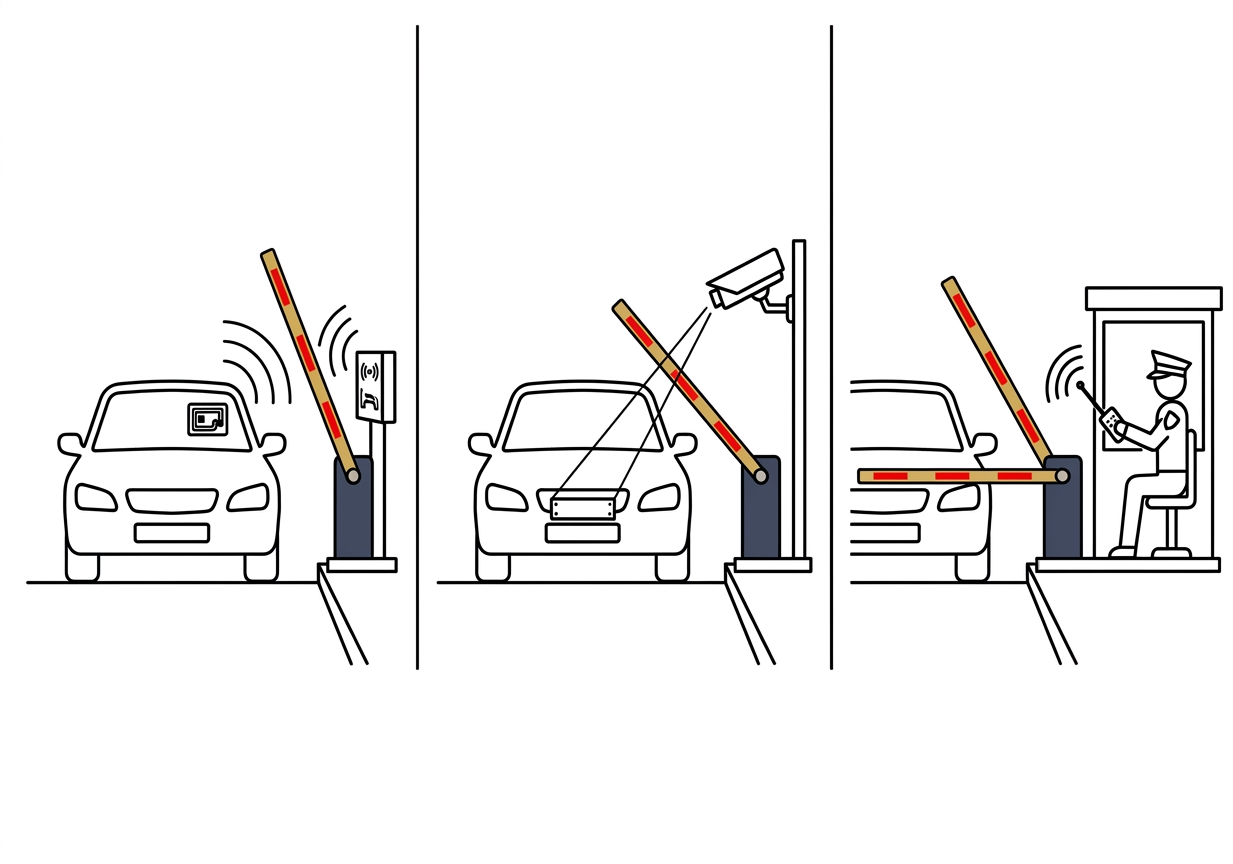
RFID and ANPR both automate vehicle entry and exit, but they identify the user in different ways. RFID recognises an electronic credential —for example, a TAG or a compatible card—, while ANPR uses a camera and software to read the vehicle plate. The best option for a car park depends on how users enter, what level of records is needed, the conditions of the lane and the available budget.
In Argentina, these technologies can be used in building car parks, gated communities, offices, commercial car parks and industrial entrances. BAROXON offers automatic vehicle barriers, RFID solutions and ALPR/LPR licence plate recognition systems, as well as options for integration with management systems. The selection must be based on the functions of the quoted model and on the real conditions of the project.
RFID stands for radio frequency identification. In a vehicle access system, a reader detects a compatible credential, such as a card, a keyfob or a TAG installed in the vehicle. When the credential is authorised, the controller sends the opening command to the automatic barrier. Depending on the design, the system may use proximity cards or longer-range UHF readers.
In a condominium car park or a gated community, each resident can receive a registered credential. The management can enable it or cancel it when the user changes, the TAG is lost or an authorisation ends. For visitors, suppliers or temporary staff, a separate procedure should be defined to avoid sharing permanent credentials.
RFID requires the user to carry or be linked to a compatible credential. A card can be forgotten or lent to another person, and a long-range TAG must be installed and configured correctly to avoid unwanted reads. The compatibility between the reader, the credentials, the barrier controller and the management software must also be checked.
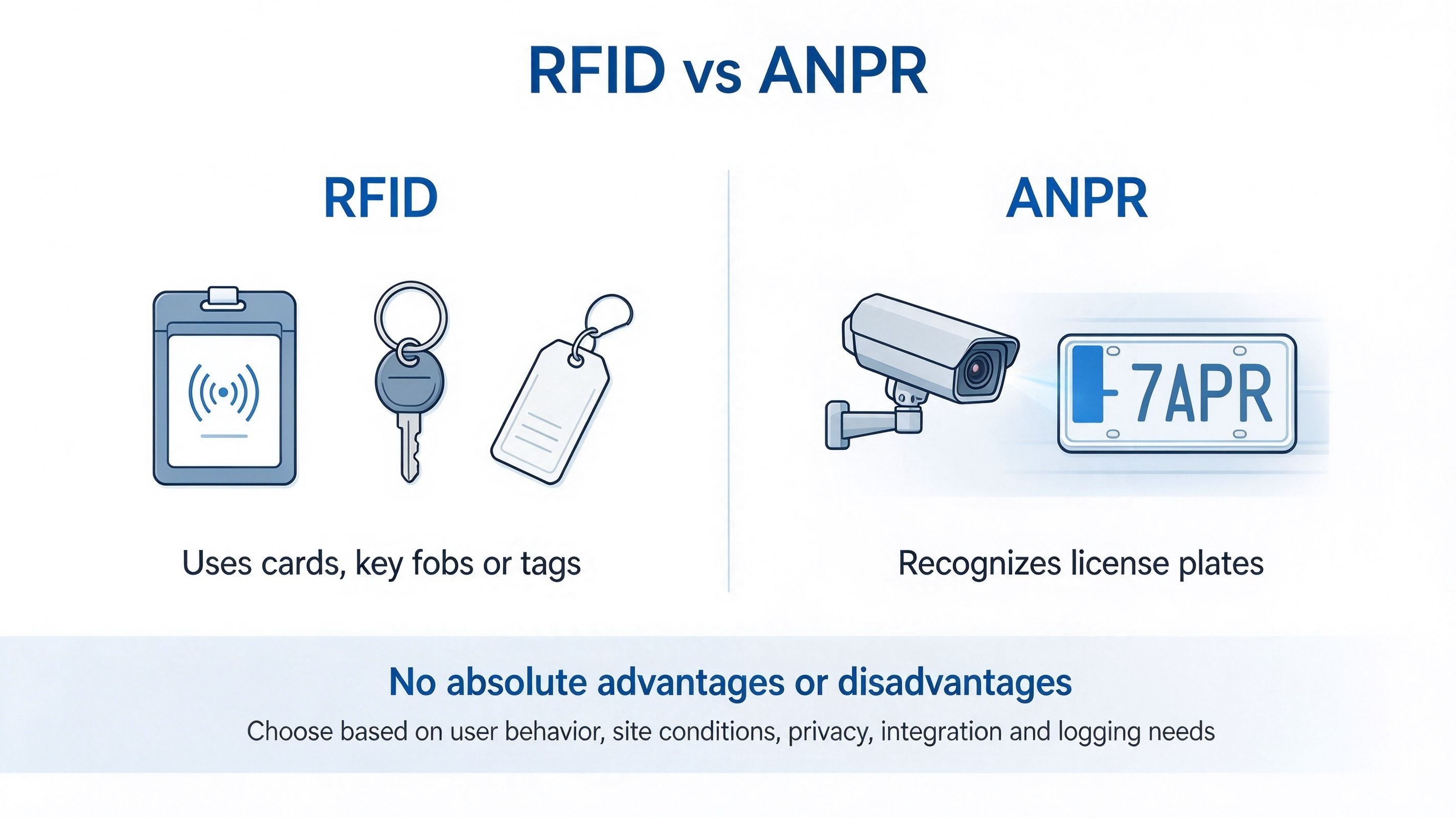
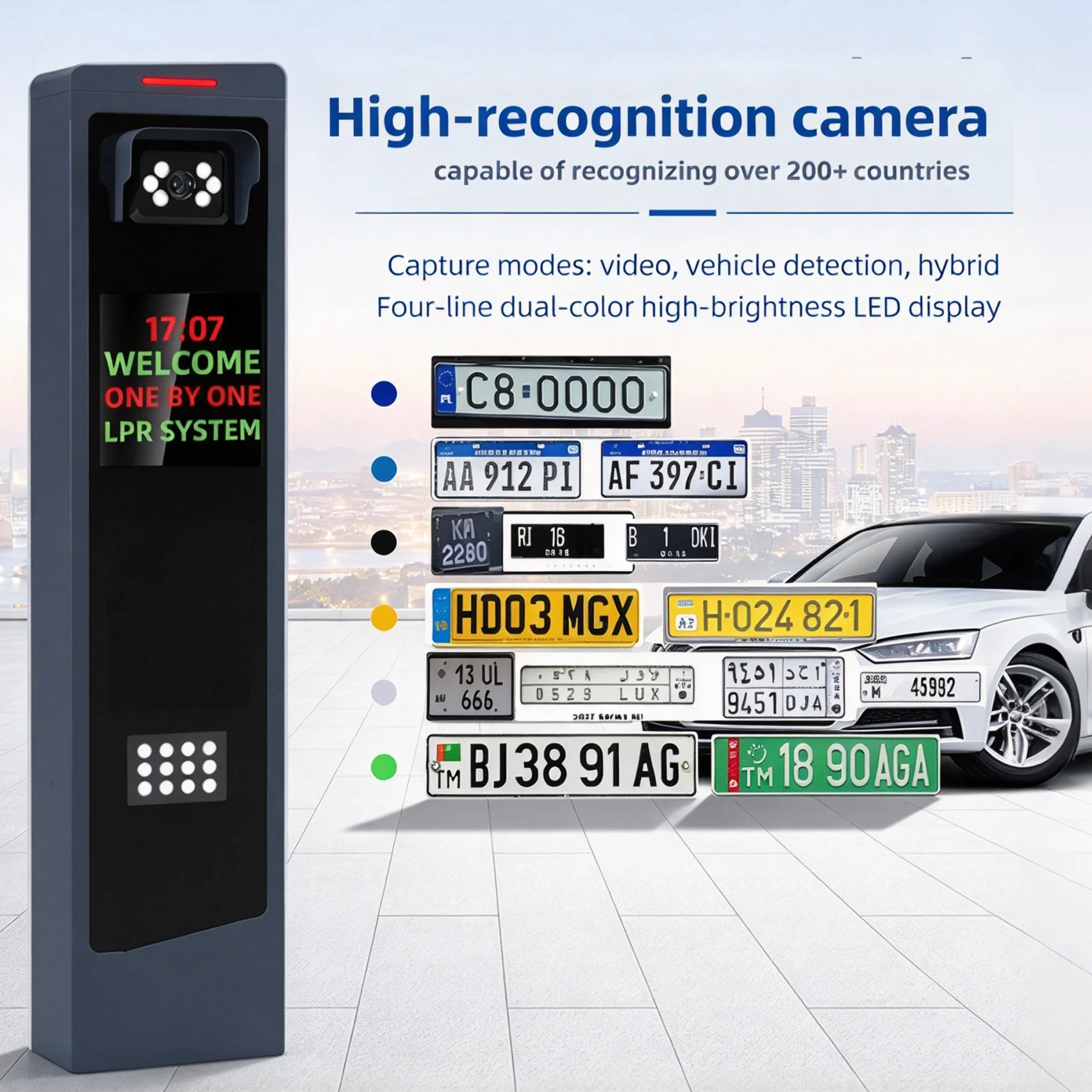
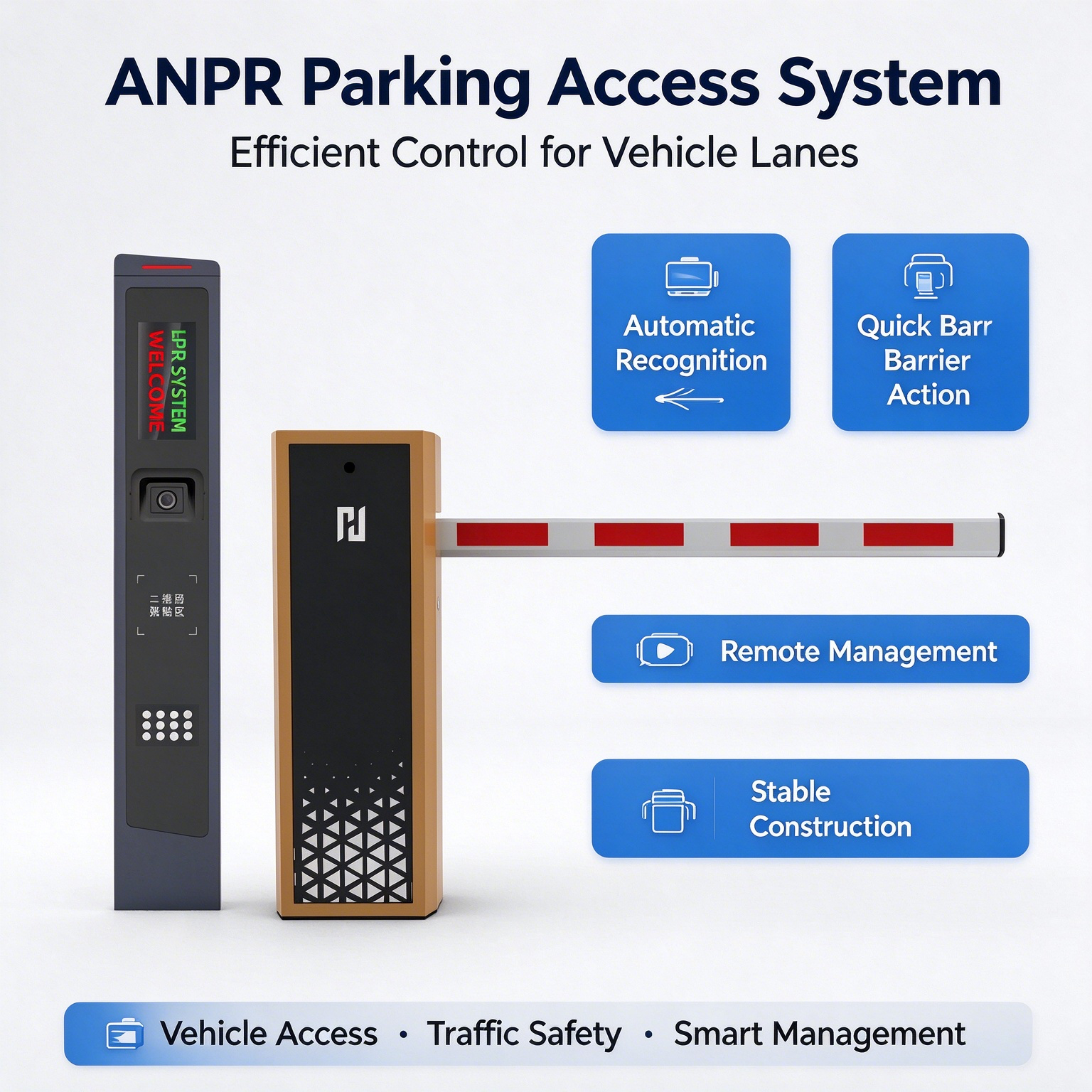
ANPR stands for automatic number plate recognition; LPR refers to licence plate recognition using images. In practice, both terms are usually used to describe a solution that captures an image of the vehicle, detects the plate and compares the recognised characters with an authorisation list or rule. If the plate meets the configured condition, the system can send a command to the barrier controller.
Unlike an RFID card, the plate is part of the visible identification of the vehicle and does not require the driver to hold a credential close to a reader. This can make access easier for previously registered vehicles and allow ticketless flows, if the camera, the controller and the parking software are integrated for that purpose.
The result depends on image quality and on the installation. Lighting, rain, dirt on the plate, reflections, the camera angle, the reading distance and the vehicle speed can affect recognition. Before implementing the system, it must be tested with the real plates and conditions of the site, and what happens when a read fails must be defined.
There is no universal answer: actual speed depends on the location of the reader or camera, the authorisation logic, the opening time of the barrier, the distance between vehicles and the way entry is managed. RFID can be very quick with a well-installed reader and compatible TAGs; ANPR can reduce manual steps when the plate is reliably recognised and the system authorises automatically.
To compare correctly, measure the total time from when the vehicle reaches the control point until it can continue, including error cases and visitor handling. Do not use only the nominal opening speed of the barrier as an indicator of the performance of the whole system.
RFID and ANPR handle identification in different ways; neither one on its own guarantees that access is secure. With RFID, credentials must be protected, lost ones revoked and unauthorised sharing prevented. With ANPR, authorised plates must be managed, read records reviewed and a procedure established for vehicles whose plate is not recognised or does not match.
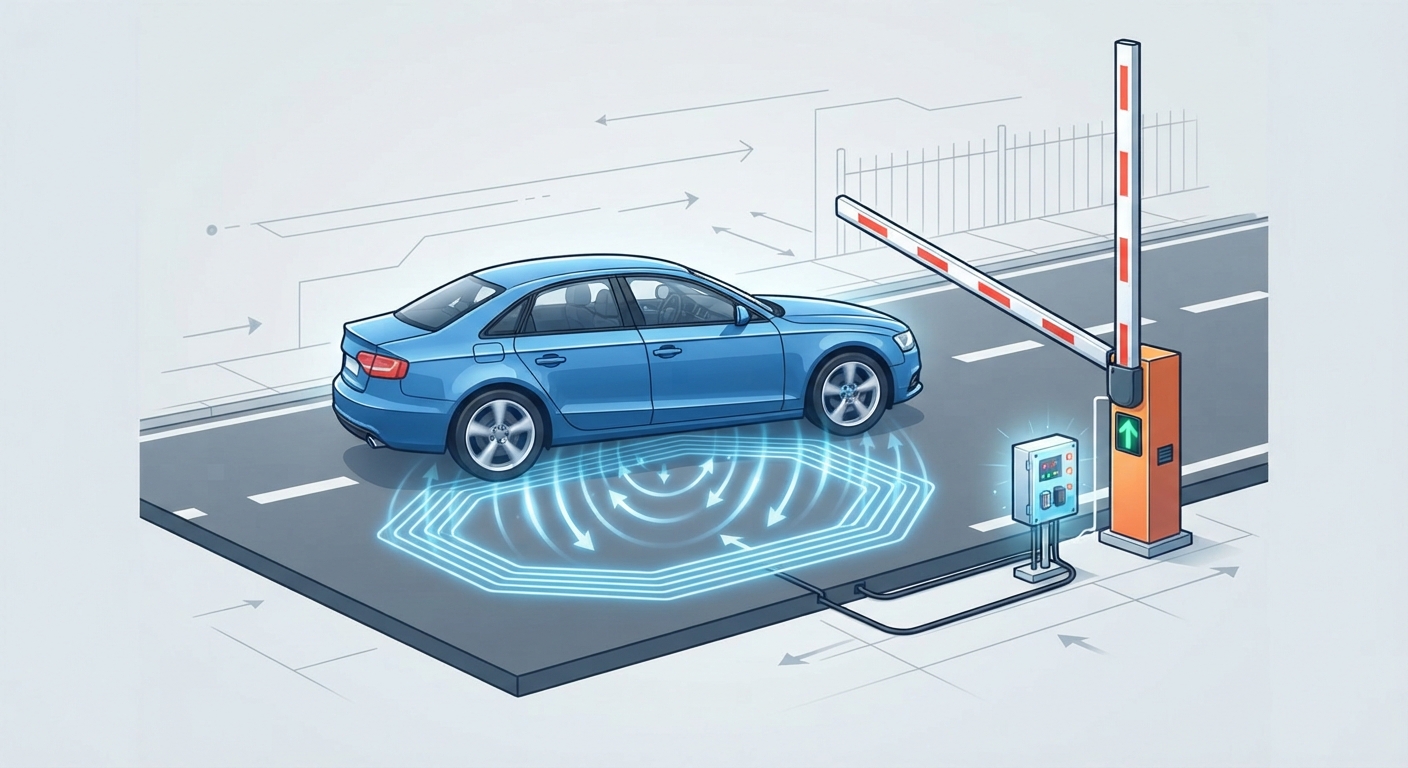
The barrier must include safety devices compatible with the lane design, such as inductive loops, photocells or radar sensors where applicable. These devices help detect vehicles while the boom is moving, but they must be installed, configured and tested according to the manufacturer instructions. Access authorisation and physical protection against the boom descending on a vehicle are different functions.
An RFID system records the use of credentials; an ANPR system may process images and data linked to plates. Before putting it into operation, define who can consult the records, how long they are kept, how requests for access to the data are handled and what information the management really needs. Apply the data protection rules and legal requirements that apply to the establishment.
In Argentina, the choice of technology must be accompanied by a clear data access and retention policy. Do not collect or keep information indefinitely if there is no operational need or legal basis to justify it; seek appropriate advice for the specific case.
The cost of RFID may include readers, cards or TAGs, installation, configuration and credential management. In ANPR/LPR, the budget may include cameras, brackets, auxiliary lighting if needed, licences or software, plate list configuration, storage and support. In both cases, the automatic barrier, the safety sensors, the cabling and the integration with existing systems must also be considered.
Do not compare only the price of a reader with that of a camera. Ask for a quote for the complete solution and check the recurring costs, updates, spare parts and technical support. The most economical option is the one that meets the traffic volume, the level of control and the operating requirements over the expected service life.
Yes. In some projects, a hybrid strategy can be useful: RFID for residents or fleet vehicles and ANPR to record entry, authorise certain vehicles or support visitor management. A manual procedure can also be kept for exceptions, such as an unreadable plate, a forgotten credential or an unregistered visit. The final architecture must prevent two systems from issuing contradictory commands to the barrier.
BAROXON publishes RFID automatic barrier solutions, ALPR/LPR systems and integrated barrier products with licence plate recognition. Before buying, ask for confirmation of the specific compatibility between the reader, the camera, the controller, the software and the interfaces available for the chosen model.
Is RFID better than ANPR for a residential car park?
Not always. RFID is usually practical when residents can use registered credentials and the management needs to control permissions. ANPR can be convenient if access is to be authorised by plate and the environment allows reliable reading. The best option depends on usage habits and on how the entrance is operated.
Does ANPR work at night or in the rain?
It can work if the camera and lighting are designed for the conditions of the site, but the result must be verified with real tests. Reflections, dirt, water or an unsuitable angle can affect the reading.
Does RFID need an Internet connection?
Not necessarily for all local operation; it depends on the architecture of the controller and the software. If remote management or cloud synchronisation is required, confirm which functions need a connection and what happens if it is interrupted.
Can ANPR be installed on an existing barrier?
It may be possible if the barrier and the controller support the necessary interface and the software can exchange the required commands or states. Before reusing the equipment, check electrical compatibility, control inputs/outputs, safety and manufacturer support.
RFID identifies an electronic credential; ANPR/LPR identifies the vehicle plate by means of a camera. RFID is usually a direct option for recurring users with managed credentials, while ANPR can facilitate plate-based access and ticketless flows when reading and integration are reliable. For some projects, combining both technologies can balance convenience, control and traceability. BAROXON offers automatic barriers, RFID options and licence plate recognition solutions; the correct configuration must be defined according to the site and confirmed for the specific model.

 WhatsApp
 WeChat